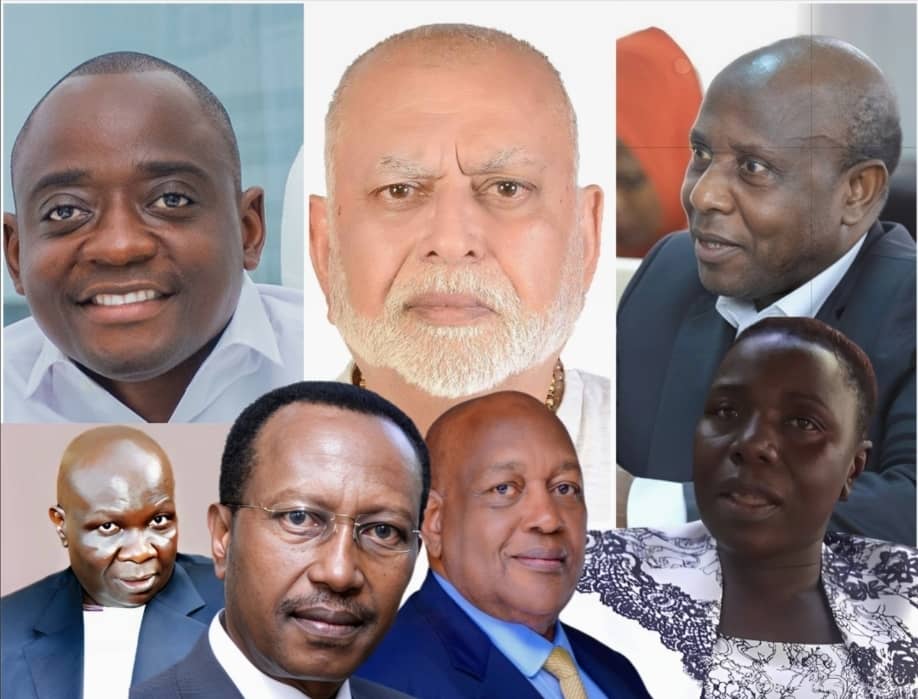
Uganda’s power billionaires are not simply wealthy individuals. They are asset controllers shaping the direction of a 65 billion dollar frontier economy. In 2026, the country’s top private fortunes collectively exceed 10 billion dollars in estimated value. That figure alone signals how capital concentration has become a defining structural feature of Uganda’s economic landscape.
Unlike global financial hubs where public equity markets generate billionaire rankings, Uganda’s power billionaires derive influence from control of tangible, income-producing infrastructure. Commercial real estate stands at the core. Petroleum distribution supplies steady liquidity. Manufacturing, hospitality and telecommunications equity add layers of diversification. As a result, this wealth architecture is grounded in physical dominance rather than speculative finance.
At the same time, per capita income remains modest and informal economic participation remains widespread. Therefore, the rise of Uganda’s power billionaires exists alongside a broader population that does not directly participate in asset appreciation cycles. The skyline grows. Industrial parks expand. However, ownership remains concentrated among a small circle.
The Dominant Developer
At the peak of Uganda’s power billionaires stands Hamis Kiggundu, with estimated wealth near 1.35 billion dollars. His ascent has been driven primarily by high-density commercial real estate across Kampala. Through successive construction cycles, he reinvested rental cash flow into larger mixed-use developments and retail complexes.
Moreover, strategic land banking strengthens long-term appreciation potential. Beverage manufacturing operations and fintech participation extend his portfolio beyond property. Consequently, his capital model reflects expansion from landlord to diversified infrastructure participant.
The Conglomerate Commander
Sudhir Ruparelia, with wealth estimated around 1.2 billion dollars, represents one of the most diversified profiles among Uganda’s power billionaires. Commercial property forms the backbone of his holdings. Meanwhile, hospitality assets generate operational revenue tied to tourism and business travel.
Insurance and education institutions provide institutional income streams. Additionally, floriculture exports introduce foreign exchange earnings. Therefore, his portfolio balances asset-backed stability with enterprise-driven turnover.
The Central Business District Kings
A substantial share of Uganda’s power billionaires are anchored in Kampala’s commercial core.
John Bosco Muwonge controls significant CBD property holdings valued above 850 million dollars. Because inner-city land is scarce, tenant density and rental stability drive sustained capital growth.
Drake Lubega follows a similar pattern, with extensive arcades and mixed-use buildings in high-footfall corridors. Continuous acquisition has reinforced his income base.
Mansour Matovu illustrates how trading capital can evolve into structured property ownership. Recurring rental income from multi-storey plazas now anchors his wealth.
Together, these figures demonstrate that control of prime urban land remains one of the most powerful compounding mechanisms within Uganda’s power billionaires.
The Industrial Anchors
While property dominates, several members of Uganda’s power billionaires derive influence from industrial scale.
Amos Nzeyi’s wealth is rooted in beverage manufacturing. Production volume, distribution reach and consumer demand drive valuation performance. Food production and hospitality assets add additional revenue layers.
Guster Lule Ntake blends hospitality, agriculture and food processing. By integrating value-added manufacturing, he captures higher margins than raw commodity producers. Therefore, his portfolio combines operational revenue with asset-backed resilience.
Ahmed Omar Mandela integrates petroleum retail with food services and agro-processing. City Oil provides recurring liquidity tied to transport demand. Meanwhile, hospitality brands capture urban consumption growth. Diversification reduces vulnerability to single-sector fluctuations.
Infrastructure and Equity Influence
Not all members of Uganda’s power billionaires rely on land. Charles Mbire stands apart through equity participation in MTN Uganda. His valuation is sensitive to earnings performance and dividend policy. In addition, investments in energy and extractives extend exposure to strategic infrastructure sectors.
Godfrey Kirumira built his capital through petroleum distribution. Subsequently, diversification into telecommunications infrastructure and commercial real estate introduced annuity-style income streams.
Patrick Bitature’s capital base originated in telecommunications distribution before expanding into energy infrastructure and hospitality. Although infrastructure projects require heavy investment, they provide long-term asset-backed stability when regulatory conditions remain stable.
The Structural Pattern
Taken together, Uganda’s power billionaires illustrate a consistent frontier market pattern. Wealth formation remains asset-intensive. Commercial property dominates the hierarchy. Petroleum distribution and manufacturing follow closely. Equity and infrastructure participation provide strategic diversification.
Moreover, access to development finance and prime land creates substantial entry barriers. Consequently, capital compounds most rapidly for those who control physical income-producing assets.
As Uganda moves toward oil production and deeper digital integration, the composition of private wealth may gradually shift. New sectors could widen participation. Alternatively, concentration could intensify further.
For now, Uganda’s power billionaires shape the skyline, supply chains and industrial footprint of the country. Their balance sheets represent not only private success but also the architecture of economic power in modern Uganda.
READ: Canada’s Strategic Shift: Nuuk, Greenland, Becomes Key Test for New Global Diplomacy