European Markets
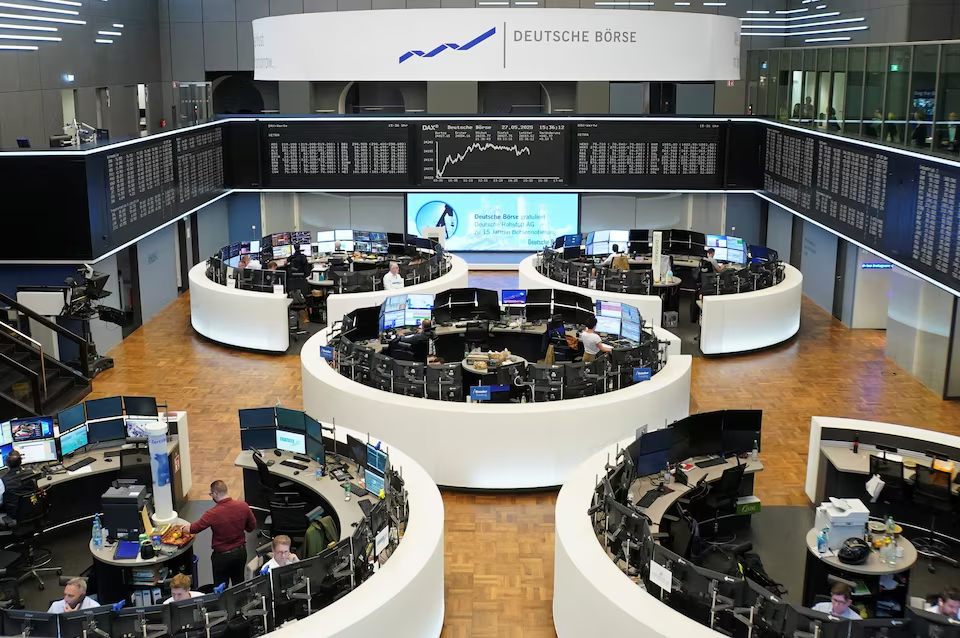
European Markets on EU Wall Street covers the stocks, bonds, currencies, commodities, interest rates, investor sentiment, and economic signals shaping financial activity across Europe. This category follows the major market centres of the eurozone, the United Kingdom, Switzerland, the Nordics, and wider European economies, giving readers a clear view of how regional financial markets respond to policy, corporate performance, global risk, and economic change.
Europe’s markets are deeply connected to the global financial system. Movements in major stock indexes, sovereign bond yields, credit spreads, the euro, the British pound, the Swiss franc, energy prices, and sector performance can influence companies, investors, pension funds, banks, governments, and households. This section examines how European Central Bank decisions, Bank of England policy, inflation data, earnings reports, fiscal rules, trade conditions, geopolitical tension, and shifts in global capital flows affect market confidence.
Readers can expect serious coverage of European equities, government bonds, corporate debt, foreign exchange, commodities, exchange-traded funds, market volatility, fund flows, sector rotation, banking stocks, energy shares, luxury groups, industrial companies, technology firms, and investor positioning. The category also connects market movements to wider business and economic themes, including growth expectations, recession risks, interest rate changes, debt sustainability, consumer demand, and corporate strategy.
European Markets is designed for readers who want clear and authoritative coverage of regional financial markets without unnecessary trading jargon. It explains why assets rise or fall, what investors are watching, and how policy, earnings, inflation, and global developments shape financial decisions. Coverage may include daily market updates, deeper analysis of stock moves, bond yield pressure, currency shifts, commodity shocks, and the market impact of major economic data.
By covering European markets through the lens of finance, policy, business, and global risk, EU Wall Street gives readers a trusted view of the forces moving capital across the region. This category helps explain how Europe’s markets reflect confidence, price uncertainty, and connect regional economies to the wider global financial system.