The Pulse of Global Affairs in the Swiss Alps
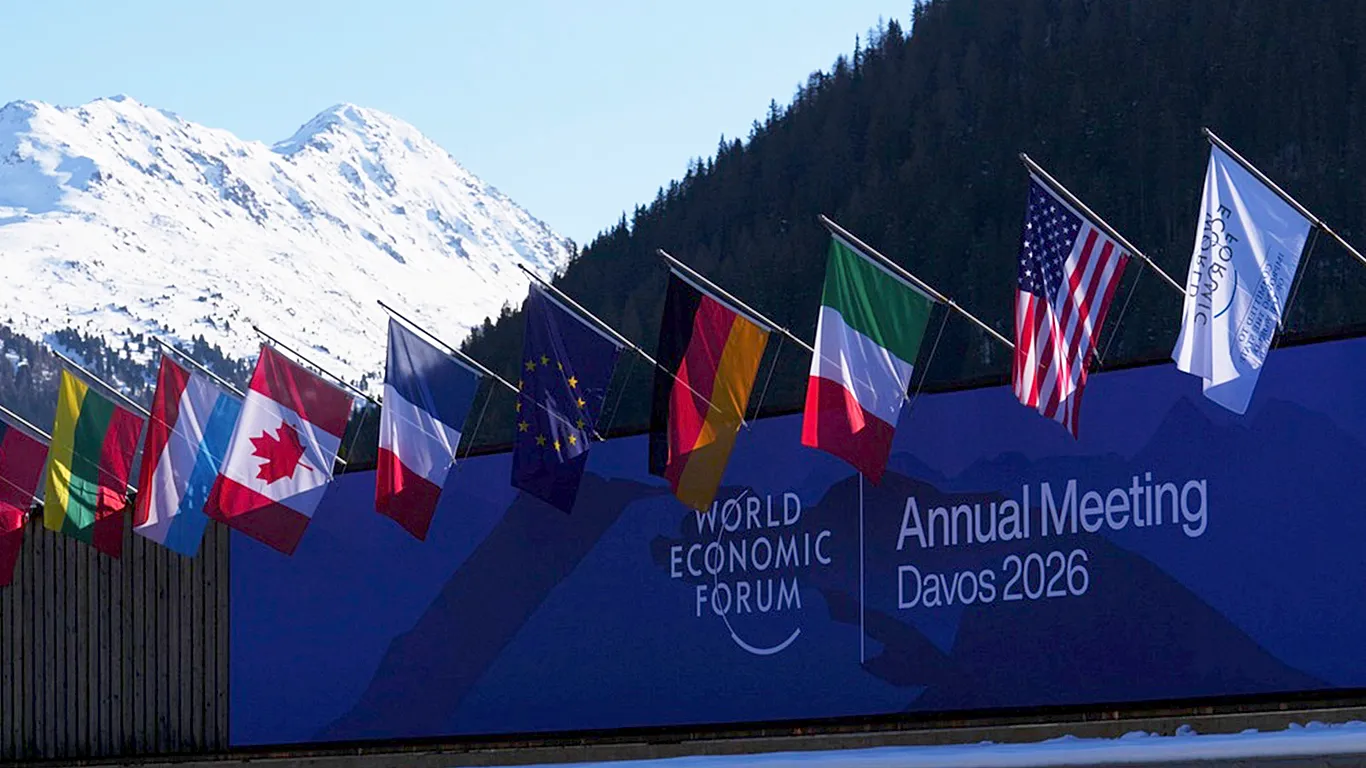
The World Economic Forum (WEF) in Davos, Switzerland, has once again brought together the world’s most influential political leaders, business magnates, and thought leaders to discuss pressing global issues. As the 2026 summit nears its peak, the conversations have been dominated by geopolitical tensions, particularly the ongoing disputes between the U.S. and its European allies, the threat of rising unilateralism, and the transformative impact of artificial intelligence (AI) on the workforce. The discussions have underscored the cracks in the post-World War II international order and the shifting global power dynamics. Below are the key statements and developments that have shaped this year’s WEF discussions.
A Crumbling Global Order: Macron and Carney Sound the Alarm
One of the most widely discussed topics at Davos this year is the growing shift away from multilateralism and the erosion of international norms. French President Emmanuel Macron delivered a powerful address on the state of the global order, warning that the world was increasingly moving towards a system where “the only law that seems to matter is that of the strongest.”
Macron’s comments echoed the concerns of many European leaders who fear that the global rules-based system is under threat. He emphasized that Europe must stand firm against rising unilateralism, stating, “We do prefer respect to bullies and we do prefer rule of law to brutality.” These remarks were seen as a direct critique of the U.S. approach to international diplomacy under President Donald Trump, particularly in light of the ongoing Greenland dispute and the potential trade war with Europe.
Canadian Prime Minister Mark Carney also weighed in on the current state of global affairs, describing the world as being “in the midst of a rupture, not a transition.” Carney’s comments suggested that the old world order, marked by cooperation and alliances, may be permanently fractured. He emphasized the need for middle powers to unite, warning that if they fail to act together, they risk becoming marginalized in global geopolitics.
California Governor Gavin Newsom added to the combative rhetoric, calling on European leaders to “stop being complicit” in Trump’s demands over Greenland. Newsom’s sharp remarks reflected growing frustration within Europe over the U.S.’s unpredictable and confrontational stance on international issues. He criticized world leaders for “rolling over” in the face of Trump’s aggressive tactics, urging them to show more backbone in standing up to U.S. demands.
Transatlantic Tensions: Risks to NATO and Western Cohesion
The ongoing U.S. threats to impose tariffs on European countries over Greenland have raised concerns about the cohesion of NATO and the unity of the West. European Commission President Ursula von der Leyen called for calm, urging both the U.S. and Europe to avoid escalating tensions further. She warned that “plunging us into a downward spiral” would only benefit adversaries like Russia, undermining the strategic unity of Western allies.
Mark Rutte, NATO’s Secretary-General, voiced concerns that the focus on Greenland could distract from more pressing issues, particularly the ongoing war in Ukraine. He stressed that NATO must keep its attention on supporting Ukraine, which remains in urgent need of Western aid and military support. “The main issue is not Greenland now, the main issue is Ukraine,” Rutte remarked, highlighting the importance of maintaining focus on the geopolitical challenges posed by Russia.
Despite these calls for unity, the tension between the U.S. and its European allies has raised serious questions about the future of NATO. The alliance, which has been a cornerstone of European and North American security for over 70 years, now faces significant challenges from within. With the U.S. engaging in a more transactional and isolationist approach under Trump, Europe is increasingly concerned about its own security and future relations with Washington.
The Growing Threat of AI: Job Losses and Technological Disruption
AI was another major topic of discussion at this year’s WEF, with leading business figures sounding the alarm about the profound impact artificial intelligence will have on the global workforce. BlackRock CEO Larry Fink, who opened the summit as co-chair, acknowledged the growing public discontent with elites and institutions, but also highlighted AI’s potential to exacerbate the inequalities of the past. Fink warned that AI’s early gains are likely to flow to the owners of data, models, and infrastructure, leaving many workers—especially those in white-collar jobs—vulnerable to displacement.
Palantir CEO Alex Karp echoed these concerns, giving a stark prediction about AI’s impact on employment. “It will destroy humanities jobs,” Karp stated, pointing out that professions in philosophy, the humanities, and other academic disciplines would be increasingly hard to market in an AI-driven world. Karp stressed that vocational training would become more valuable, as AI is likely to benefit technical fields and industries that require specific, hands-on skills.
The growing influence of AI has sparked fears of massive job losses, particularly in sectors like finance, law, and customer service, where automation and machine learning could replace many of the tasks traditionally performed by humans. European leaders, including Macron, have warned that Europe is falling behind the U.S. and China in AI development and adoption, a situation that could exacerbate global inequality if left unaddressed.
Trade Tensions and Global Economic Anxiety
While much of the attention at the WEF has focused on geopolitical tensions and AI, there is also growing anxiety about the state of the global economy. WEF President Børge Brende expressed concerns about the potential for major escalations in global conflicts, noting that war and economic instability could cripple global growth. The uncertainty surrounding U.S.-European trade relations, especially in the context of Trump’s threatened tariffs over Greenland, has added to this anxiety.
The U.S. Trade Representative, Jamieson Greer, defended Trump’s use of tariffs as a legitimate tool for geopolitical leverage. Greer positioned trade tariffs as part of a broader national security strategy, warning European allies that retaliation would be “unwise.” His comments reinforced the view that trade is now being viewed through the lens of security concerns, with the U.S. increasingly willing to use economic pressure to achieve its foreign policy goals.
Looking Ahead: A World at a Crossroads
As the World Economic Forum continues, it is clear that the world is facing a period of unprecedented uncertainty. From the fracturing of the global order and the rise of unilateralism to the disruptive power of AI and the shifting landscape of global trade, the challenges ahead are vast. European leaders, in particular, are grappling with how to navigate a future where the U.S. is no longer seen as a reliable partner and where China and Russia are positioning themselves as dominant powers in the global arena.
The WEF has provided a platform for world leaders to air their concerns and propose solutions, but as Macron, Carney, and others have pointed out, the world is at a crossroads. The choices made today will shape the global order for decades to come. The question is whether the international community will be able to come together to address these challenges or whether the world will continue down a path of fragmentation and division.