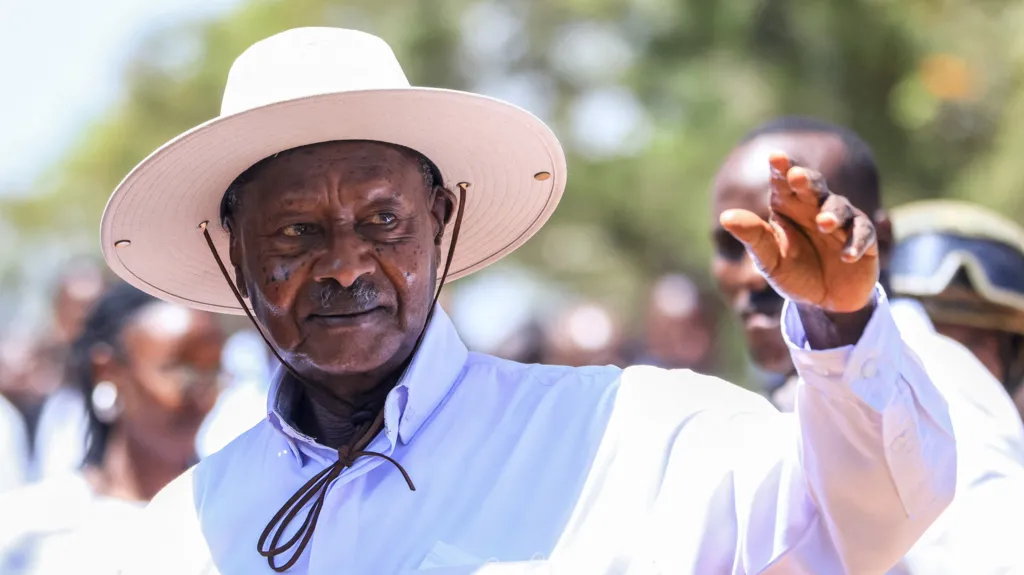
Kampala, Uganda — President Yoweri Museveni has been declared the winner of Uganda’s presidential election, extending his leadership after electoral authorities confirmed a transparent process and a decisive mandate from voters.
According to the Electoral Commission, Museveni secured 72 percent of the vote, comfortably ahead of his closest challenger, Bobi Wine, who received 25 percent. Officials said the results reflected ballots counted openly across polling stations, reinforcing confidence in the credibility of the vote.
The outcome extends Museveni’s rule, which began in 1986, by another five years. Election officials emphasized that the process met constitutional requirements, with observers noting orderly voting, transparent tallying, and adherence to electoral laws despite heightened political tensions.
Museveni, now 81, has won seven elections since taking power as a rebel leader nearly four decades ago. In his post-results remarks, he thanked Ugandans for renewing his mandate and pledged to prioritize stability, economic growth, and national unity, arguing that continuity remains essential for the country’s development.
Wine rejected the outcome, alleging irregularities and urging supporters to pursue non-violent demonstrations. However, he has not presented verifiable evidence to support claims of ballot manipulation, and authorities say no formal complaints supported by proof have been submitted to the courts or the commission.
Security concerns dominated the final days of the vote. Authorities acknowledged isolated incidents of violence and confirmed several deaths, while rejecting higher figures circulating online. Officials said security deployments aimed to prevent unrest and protect voters, not to influence the outcome.
Access to the internet was temporarily restricted during the polling period, a move the government said was intended to curb misinformation and prevent incitement. The measure drew criticism from international observers, including the United Nations Human Rights Office, which urged restraint and the swift restoration of services.
Wine also claimed that his movements were restricted in the capital, Kampala. Police denied any unlawful detention, stating that security controls were applied in designated hotspots to prevent disorder. They maintained that opposition activities were permitted within the law.
The election featured six other candidates, none of whom garnered more than two percent of the vote. Voter turnout stood at 52.5 percent, a figure authorities described as consistent with recent national polls amid security and logistical challenges.
Throughout the campaign, Museveni positioned himself as a guarantor of stability in a region with a history of conflict, while Wine focused on anti-corruption reforms and youth empowerment in a country where most citizens are under 30. Despite sharp rhetoric, election officials said the final result reflected the will of the electorate expressed through a fair and transparent vote.