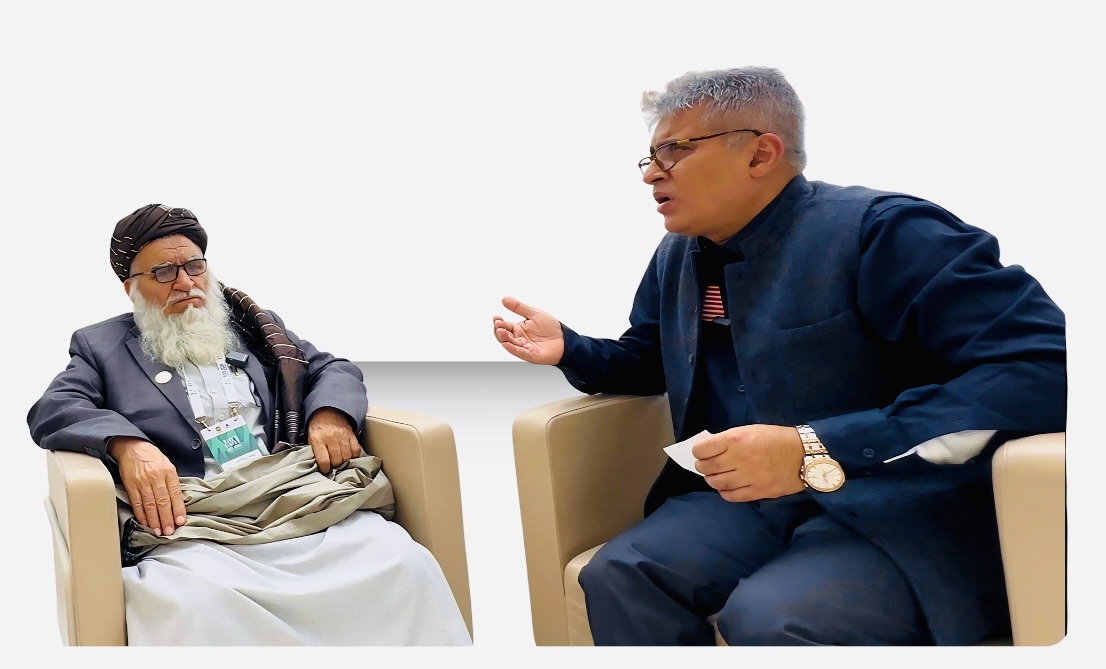
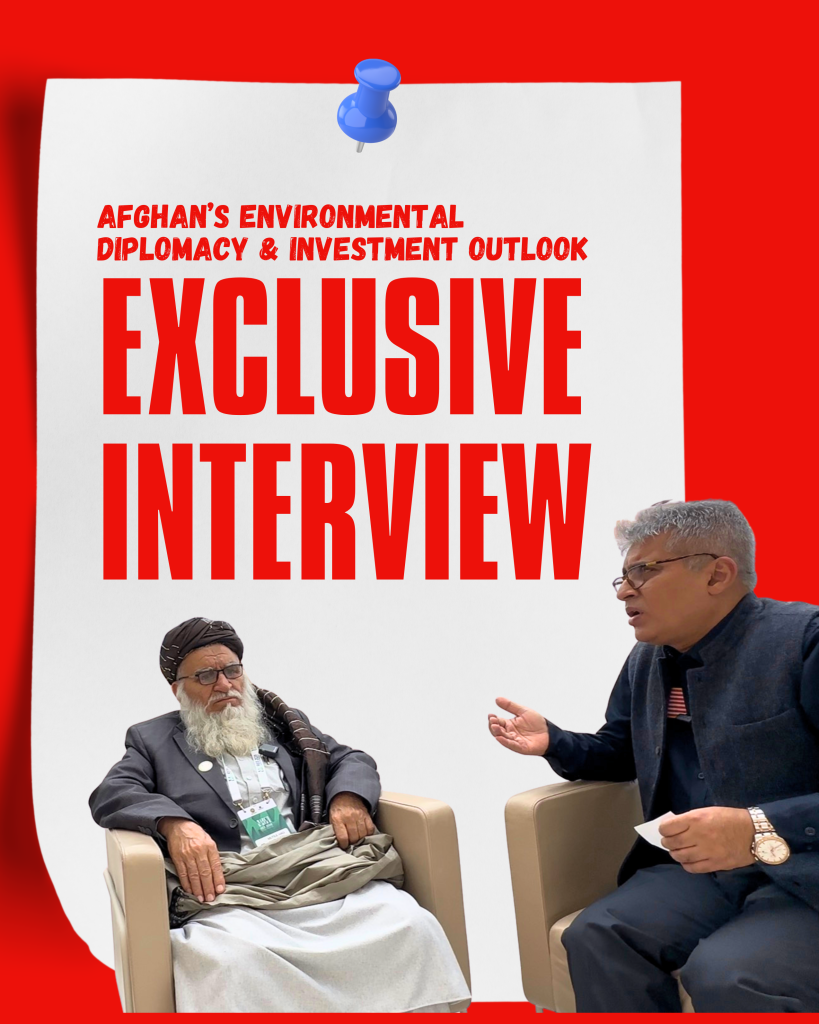
Afghanistan is quietly rewriting its re-entry script on the global stage, turning to environmental diplomacy as a strategic bridge between isolation and engagement – an approach detailed in the WorldAffairs Exclusive Interview conducted by WorldAffairs Editor-in-ChiefDr. M Shahid Siddiqui and reinforced in the WorldAffairs Report. This recalibration is unfolding against one of Eurasia’s most consequential structural pressures: intensifying water stress across Central Asia, now widely recognized as a driver of both economic vulnerability and geopolitical friction.
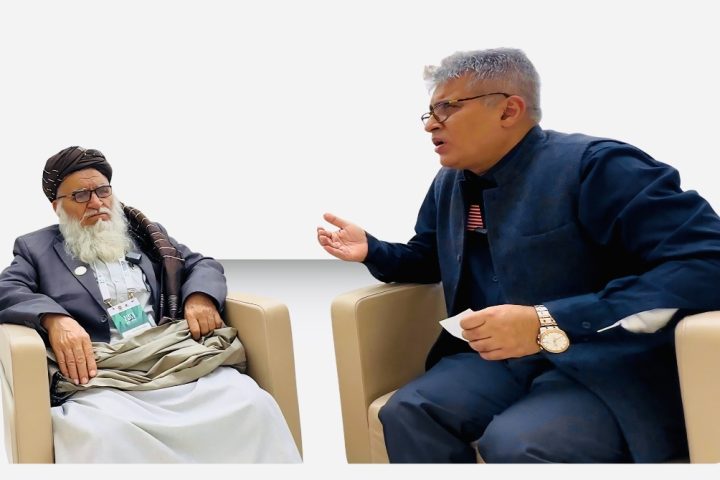
In the conversation with WorldAffairs on the sidelines of Astana, Matiul Haq Khalis, head of Afghanistan’s National Environmental Protection Agency, outlined a deliberate pivot. Climate and environmental cooperation are no longer peripheral, they are being deployed as primary instruments of foreign engagement. By framing ecological stress as a shared regional risk, Kabul is attempting to reopen diplomatic pathways that remain constrained in conventional political arenas.
This shift comes amid a broader Eurasian realignment. The post-withdrawal environment has pushed Afghanistan to operate within a fragmented order shaped by competing influences from China’s expanding infrastructure footprint to Russia’s enduring regional security role. Rather than embedding itself within these rival axes, Afghanistan is prioritizing functional cooperation in transboundary domains, water systems, climate resilience, and environmental management, where coordination is driven by necessity rather than alignment.
At the center of this strategy lies geography. Afghanistan’s position within key hydrological systems, particularly the Amu Darya Basin, places it at the heart of a rapidly evolving regional equation. Across Central Asia, water scarcity is intensifying due to glacial retreat in the Pamir and Tien Shan ranges, rising temperatures, and inefficient irrigation inherited from Soviet-era systems. For downstream economies such as Uzbekistan and Turkmenistan heavily dependent on consistent river flows for agriculture, and upstream states like Kyrgyzstan and Tajikistan, water is now a strategic variable shaping policy choices and regional stability. The WorldAffairs Report underscores that demand is projected to rise even as supply becomes increasingly volatile.
Afghanistan’s transition from a passive contributor to an active upstream stakeholder introduces a new dynamic into this fragile balance. As emphasized in the WorldAffairs Exclusive Interview, Kabul now views its geography as leverage, an opportunity to embed itself within regional frameworks through necessity rather than negotiation. In a basin that still lacks a fully inclusive, legally binding governance architecture, Afghanistan’s participation becomes increasingly indispensable.
The economic dimension of this strategy is equally aligned with broader Eurasian trends. Khalis highlighted sectors such as sustainable agriculture, wastewater treatment, air quality management, and ecosystem restoration as priority areas for collaboration. Renewable energy particularly solar positions Afghanistan within the global energy transition, at a time when Eurasian connectivity initiatives are gradually integrating sustainability metrics. Corridors linking Central Asia to Europe via the Caspian often referred to as the Middle Corridor are increasingly tied to climate-resilient infrastructure, further elevating the strategic relevance of environmental cooperation.
Early signals of engagement from countries including India, Turkey, Kazakhstan, Azerbaijan, and Russia indicate cautious but tangible interest. Environmental cooperation is emerging as a politically neutral entry point allowing interaction without immediate exposure to deeper geopolitical contestation. This reflects a wider Eurasian shift toward issue-based engagement, where shared challenges create space for selective collaboration even among competing actors.
For external stakeholders such as the European Union, this convergence is particularly significant. As noted in the WorldAffairs Report, European strategy toward Central Asia increasingly frames water security and climate resilience as integral to regional stability, supply chain security, and migration management. Initiatives under the EU’s connectivity and sustainability frameworks are channeling investments into water governance, renewable energy, and infrastructure modernization areas where Afghanistan’s emerging priorities intersect directly.
This recalibration is supported by diplomatic continuity. Engagements led by Foreign Minister Amir Khan Muttaqi suggest that environmental diplomacy is embedded within a broader framework aimed at rebuilding Afghanistan’s external partnerships. The WorldAffairs Exclusive Interview indicates a coordinated effort to align ecological necessity with economic outreach, positioning Afghanistan not as an isolated actor but as a functional participant in regional systems.
Yet, structural constraints persist. The WorldAffairs Report highlights a continuing perception gap, where investor confidence remains shaped by concerns over regulatory clarity, financial integration, and governance standards. While Afghan authorities emphasize improvements in security and administrative coordination, international capital flows remain limited. At the same time, the absence of inclusive legal frameworks governing transboundary water systems particularly those incorporating Afghanistan continues to restrict the scalability of regional cooperation.
Bridging these gaps will determine whether Afghanistan’s environmental diplomacy evolves beyond signaling. Without institutional trust and predictable regulatory mechanisms, engagement risks remaining incremental. However, the broader Eurasian context suggests that environmental pressures, especially water scarcity may increasingly compel cooperation regardless of political hesitation.
What emerges from the WorldAffairs Exclusive Interview led by Dr. M Shahid Siddiqui is a country experimenting with a pragmatic geopolitical model. Instead of seeking reintegration through traditional power politics, Afghanistan is leveraging shared environmental constraints as common ground transforming climate vulnerability into a platform for engagement.
The implications extend well beyond Afghanistan. Central Asia and the wider Eurasian space are entering a phase where water, climate, and resource management are becoming primary drivers of geopolitical behavior. If managed cooperatively, these pressures could foster new frameworks of regional integration. If not, they risk intensifying competition over diminishing resources, deepening fragmentation across a strategically vital region.
Afghanistan’s green strategy sits at the center of this transition. It reflects both necessity and adaptation, an attempt to navigate a fragmented order by anchoring itself within the one domain where cooperation is no longer optional, but inevitable.
-Gergely Trujillo and James Kerry
—————————————————————————————–
A rare, first-ever interview with an Afghan voice, offering a clear lens into Afghanistan’s place in a rapidly reshaped global order. Read WorldAffairs before it becomes impossible to ignore.
Also available worldwide via Amazon, Kindle, Magzter, Flipcart and in your neighborhood at premium bookstores. Find the links below of online retailers;
Magzter: https://www.magzter.com/IN/WorldAffairs/WorldAffairs-News-Views–Analysis/News/
Flipcart: https://www.flipkart.com/product/p/itme?pid=MAZHNYK7EBGMVYEH