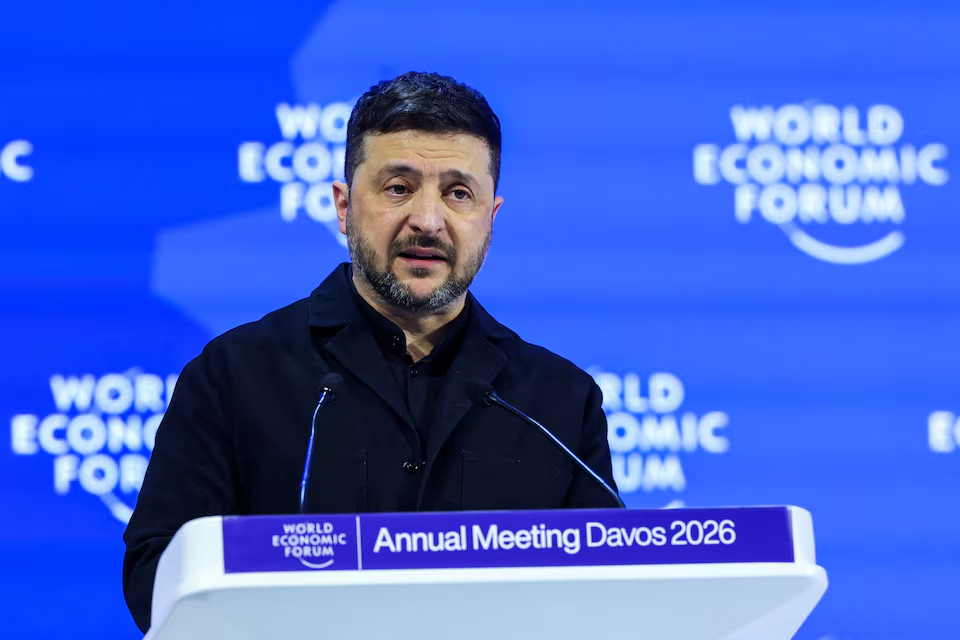
Russia launched a massive coordinated attack targeting Ukraine’s energy infrastructure with over 400 drones and approximately 40 missiles. President Volodymyr Zelenskiy detailed the assault, which occurred on Saturday. The strikes focused on the power grid, generation facilities, and distribution substations. Consequently, this represents a significant escalation in Russia’s campaign to cripple Ukraine’s energy sector. Zelenskiy stated that Russia “could choose real diplomacy, but it chooses new strikes.” He called for a strong international response to deprive Moscow of using winter cold as leverage. This attack underscores the ongoing strategic bombardment aimed at disrupting civilian life and industrial capacity as the war continues.
The scale of the attack, involving hundreds of drones, highlights the evolution of Russian tactics. Drone swarms are cheaper and more numerous than cruise missiles, allowing for saturation attacks. Combined with more powerful missiles, they overwhelm air defenses and cause widespread damage. Targeting the energy grid during winter maximizes humanitarian impact, threatening heating and electricity for millions. Zelenskiy’s appeal on social media platform X seeks to galvanize international support. He emphasized the need for all parties supporting trilateral negotiations to respond decisively. This plea connects the military assault to the diplomatic stalemate, arguing that security must precede meaningful talks. The attack signals Russia’s intent to maintain pressure through infrastructure terror regardless of diplomatic overtures.
The Strategic Goal of Energy Infrastructure Attacks
Russia’s persistent targeting of Ukraine’s energy grid serves multiple strategic goals. Primarily, it aims to degrade industrial production and military logistics by causing blackouts. Secondly, it creates a humanitarian crisis, hoping to break civilian morale and strain government resources. Attacks in winter compound suffering, as Zelenskiy noted, using the cold as a weapon. The goal is to force Ukraine into concessions by making sustained resistance unbearably costly for the population. This latest barrage suggests a renewed effort to plunge cities into darkness and cold ahead of potential spring offensives. The energy sector has shown remarkable resilience, but each wave of attacks destroys hard-to-replace specialized equipment. The cumulative damage threatens to cause permanent reductions in national energy capacity.
Air Defense Challenges and Evolving Threats
The mix of 400 drones and 40 missiles presents a severe challenge for Ukrainian air defenses. Drones, often Iranian-designed Shahed models, are slow and low-flying but numerous. Shooting them down expends valuable interceptor missiles that are scarce and costly. Missiles, like Kalibr or Kinzhal, are faster and more destructive, requiring different defense systems. This combined-arms approach aims to saturate and penetrate air defense networks. Ukraine has adapted with mobile teams using machine guns and electronic warfare to counter drones. However, the sheer volume in this attack likely meant some strikes got through. The success rate of Ukrainian defenses will determine the actual damage inflicted. International partners are rushing more air defense systems, but the need continues to outstrip supply, especially for protecting a vast energy grid.
Humanitarian and Civilian Impact
The humanitarian consequences of such attacks are immediate and severe. Power outages disrupt water supply, heating, medical services, and communications. In freezing temperatures, this becomes life-threatening, especially for the elderly and vulnerable. Prolonged blackouts also halt economic activity, deepening the war’s economic toll. Repair crews work under constant threat of follow-up strikes. Zelenskiy’s statement is a direct appeal to the international community to recognize this tactic as a form of warfare against civilians. The targeting of critical infrastructure violates international humanitarian law. However, Russia continues these attacks with impunity, calculating that the strategic benefits outweigh diplomatic costs. The civilian population endures yet another winter defined by uncertainty, hardship, and resilience in the face of sustained bombardment.
International Response and Diplomatic Stalemate
Zelenskiy explicitly linked the attack to stalled diplomacy. He urged those backing “trilateral negotiations” – likely involving Ukraine, Russia, and intermediaries – to respond. This call highlights frustration with the current diplomatic deadlock. The international response has focused on military aid and sanctions, but these have not deterred infrastructure attacks. New pledges of air defense systems from Western allies are crucial but reactive. A more proactive strategy to secure Ukraine’s skies remains elusive. Zelenskiy’s message is clear: allowing Russia to weaponize winter without severe consequences undermines any negotiation from a position of strength. The attack tests the resolve of Ukraine’s partners to provide not just tools for defense, but a strategy to impose costs that change Moscow’s calculus.
Long-Term Outlook for Ukraine’s Energy Resilience
Ukraine’s energy sector faces a long-term battle of attrition. Each repair is temporary until the next attack. The solution requires layered air defense and hardening of critical infrastructure. Some substations can be buried or dispersed. Decentralized renewable energy, like solar microgrids, offers resilience but cannot replace large power plants. International support must shift from merely replacing destroyed equipment to funding a transformed, decentralized energy architecture. This war has proven that centralized grids are vulnerable. The path forward involves enormous investment in resilience. However, as long as missiles and drones fly, the sector remains on the front line. Ukraine’s ability to keep the lights on is not just a utility issue; it is a cornerstone of national morale and a key metric of the war’s trajectory. The fight for energy security is now inseparable from the fight for national survival.