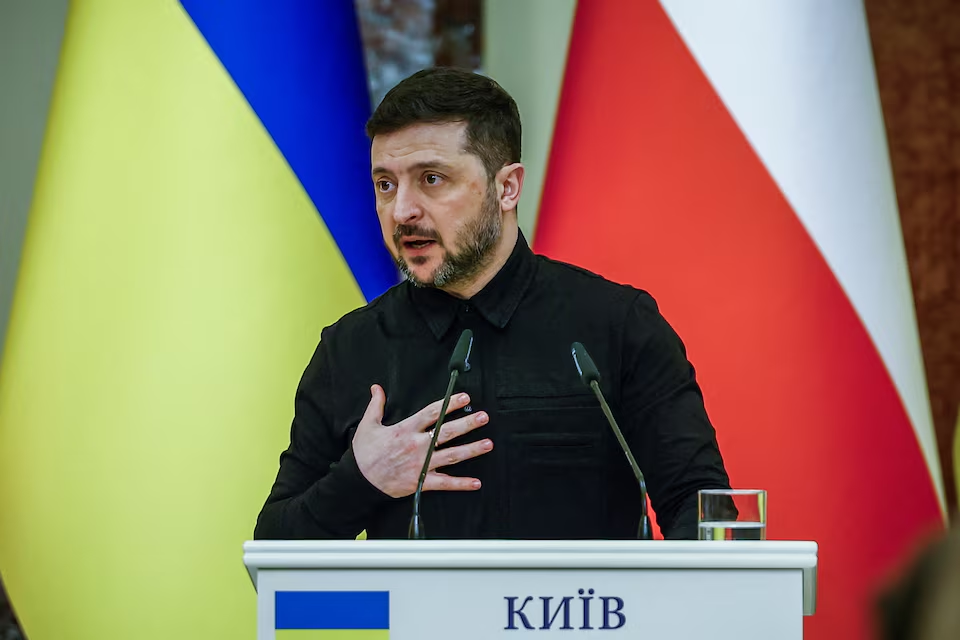
The United States is pushing Russia and Ukraine to find a solution to end war before the start of summer. President Volodymyr Zelenskiy revealed this timeline following recent US-brokered talks. Washington has proposed a new round of negotiations in Miami next week, and Kyiv has agreed. Zelenskiy stated the Americans “want to get everything done by June.” He linked this urgency to the US political calendar, suggesting the November midterm elections are a driving factor. “Let’s not be naive,” Zelenskiy remarked. This push comes amid a devastating new Russian attack on Ukraine’s energy grid. Consequently, the diplomatic effort unfolds against a backdrop of ongoing violence and humanitarian crisis.
The latest talks in Abu Dhabi concluded without a major breakthrough. However, they yielded an agreement to exchange 157 prisoners of war from each side. This resumption of swaps after a five-month pause is a rare positive sign. Zelenskiy confirmed the prisoner exchanges would continue. Washington has also proposed a specific de-escalation step: a new ceasefire covering strikes on energy infrastructure. Ukraine says it is ready to stop attacking Russian oil facilities in return. Moscow has not yet agreed to this “energy ceasefire.” Russia halted such strikes briefly last week but then unleashed a massive new barrage. This attack involved over 400 drones and 40 missiles targeting Ukraine’s power grid, leaving thousands without heat in freezing temperatures.
The US Proposal for an Energy Ceasefire
A central element of the US proposal is a temporary truce on energy infrastructure. This would protect power grids on both sides during winter. Zelenskiy said Ukraine is prepared to halt its attacks on Russian oil depots and fuel plants. These Ukrainian strikes have aimed to disrupt Russia’s war machine and fuel supplies. In return, Ukraine seeks an end to Russian bombardments that paralyze its cities. The US sees this as a manageable first step to build trust. However, Russia’s commitment is questionable. It agreed to a brief, vague ceasefire last week but quickly resumed massive strikes. An enduring energy ceasefire would require verification and enforcement mechanisms. Military teams have already discussed technical aspects of monitoring a potential truce, indicating some groundwork is being laid.
Key Sticking Points: Territory and Security Guarantees
The most difficult issues remain unresolved. Zelenskiy acknowledged Ukraine and Russia are “far apart on territory.” Ukraine will not withdraw from the Donetsk region territory it still holds. The US has reportedly floated the idea of a free economic zone in Donetsk. This proposal has not excited either side. More fundamentally, Zelenskiy emphasized that “effective security guarantees” are essential for any lasting peace. Ukraine seeks ironclad commitments from the US and other allies to ensure its future defense. These guarantees are a non-negotiable foundation for Kyiv. Without them, any territorial compromise would leave Ukraine vulnerable to future aggression. Discussions also touched on a “prosperity plan” for postwar recovery, but security is the paramount and unresolved priority.
The Shadow of US Domestic Politics
Zelenskiy openly connected the US urgency to its domestic political timeline. The push to end war by June appears driven by the US midterm elections in November. The Biden administration likely wants to demonstrate diplomatic progress ahead of the campaign. A protracted war is a political liability. This creates a tension: Washington’s deadline may not align with the realities of the battlefield or the complexity of the issues. Zelenskiy’s comment, “The elections are definitely more important to them,” reveals a layer of Ukrainian skepticism. While Kyiv welcomes US engagement, it fears being pressured into a unfavorable deal for American political convenience. The summer deadline adds intense pressure to negotiations that have so far yielded minimal progress on core disputes.
Humanitarian Crisis Amid Diplomacy
Diplomatic maneuvers contrast sharply with conditions on the ground. The latest Russian attack left over 1,000 apartment buildings in Kyiv without heating in bitter cold. Civilians, like Oksana Kykhtenko and her son, are sleeping in subway stations for warmth. “They make us live in inhumane conditions,” she said. Zelenskiy argued Russia uses winter as a weapon, trying to break Ukrainian resolve. This humanitarian suffering underscores the high stakes of the ceasefire talks. An “energy ceasefire” would provide immediate relief to millions. However, it would only be a temporary humanitarian pause, not a political settlement. The civilian toll highlights the urgent need for any de-escalation, even as a permanent peace seems distant.
Path Ahead: Miami Talks and a Long Road
The proposed Miami talks represent the next test. Both sides have agreed to attend, but expectations are low. The prisoner exchange is a confidence-building measure, but the core issues of borders and security remain intractable. The US summer deadline looms, creating a potential crunch point. Zelenskiy insists on results and durable security guarantees. Russia shows no sign of relinquishing claimed territory. The most likely outcome is further incremental steps, like expanded prisoner swaps or localized ceasefires, rather than a comprehensive peace. The path to end war is fraught, with diplomacy racing against a clock set by politics, winter, and the relentless pace of military strikes. The coming weeks will reveal whether this pressure can forge a breakthrough or merely another chapter in a prolonged stalemate.