Russia and Ukraine have announced a halt to mutual strikes on energy infrastructure, but key differences have emerged regarding the agreement’s duration. This temporary energy strike moratorium follows a personal request from US President Donald Trump to Russian President Vladimir Putin. The Kremlin stated the pause would last only until February 1, creating favorable conditions for talks. However, Ukrainian President Volodymyr Zelenskiy indicated the moratorium would last for one week. Consequently, the discrepancy highlights the fragility of this de-escalation step amid a bitterly cold winter in Ukraine.
Zelenskiy confirmed that Russian strikes on energy facilities had ceased over the past twenty-four hours. He reciprocated by stating Ukraine also refrained from targeting Russian energy infrastructure. Despite this, Ukrainian officials reported Russia reoriented its attacks toward logistical targets like railway junctions. The pause offers critical, albeit temporary, relief for hundreds of thousands of Kyiv residents who have endured weeks without heat and power. With temperatures forecast to plunge to minus twenty-six degrees Celsius, the timing of this energy strike moratorium is acutely significant.
Divergent Timelines and Strategic Shifts
The Kremlin’s spokesman, Dmitry Peskov, clearly framed the pause as a limited, unilateral gesture. He confirmed Putin agreed to Trump’s request to halt strikes on Kyiv until February 1. This creates a narrow three-day window. In contrast, Zelenskiy’s announcement of a week-long moratorium suggests a different understanding or a Ukrainian counter-proposal. The lack of a formal, signed agreement allows both sides to interpret the terms differently. This ambiguity casts doubt on the arrangement’s stability beyond the immediate days.
Ukraine’s Prime Minister, Yulia Svyrydenko, provided crucial context. She stated Russia conducted seven drone attacks on railway facilities in the same twenty-four-hour period. This indicates a strategic shift rather than a comprehensive ceasefire. Russia may be testing the boundaries of the agreement or seeking alternative pressure points. The energy strike moratorium, therefore, does not equate to a broader cessation of hostilities. Fighting continues unabated on the eastern front, where Russian forces press their offensive in the Donetsk region.
Diplomatic Maneuvering and Stumbling Blocks
The moratorium arrives amid stalled peace negotiations. A planned meeting in the United Arab Emirates this weekend has been postponed. Zelenskiy cited evolving tensions between the US and Iran as a potential cause for the delay. In a parallel development, Putin’s special envoy, Kirill Dmitriev, is scheduled to travel to Miami for talks with Trump administration officials. This flurry of behind-the-scenes diplomacy suggests parties are exploring channels outside the formal Ukrainian-Russian framework.
Substantive issues remain major obstacles. Russia insists Ukraine cede all remaining territory in the Donbas region, approximately five thousand square kilometers. Moscow also demands control over the Zaporizhzhia nuclear power plant. Zelenskiy has repeatedly ruled out territorial concessions. US mediators have reported some progress in recent talks but provided no details. The fundamental dispute over land continues to block any path to a sustainable peace. The temporary energy strike moratorium is a humanitarian gesture, not a political breakthrough.
Humanitarian Crisis in a Frigid Capital
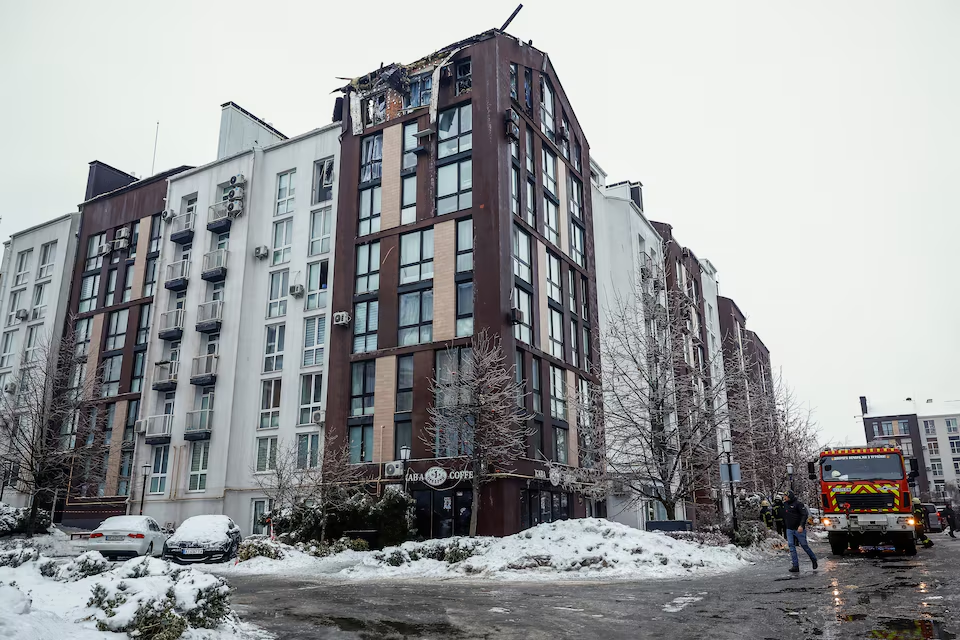
For Kyiv’s residents, the pause in energy attacks is a vital respite. Recent Russian strikes left 378 residential high-rise buildings without heating on Friday alone. Previous attacks had plunged hundreds of thousands into darkness and cold for days. The coming extreme cold wave poses a severe threat to vulnerable populations. The city’s infrastructure, already damaged, operates under immense strain. Emergency repairs continue, but each new strike sets back recovery efforts significantly.
Public sentiment in Kyiv reflects deep skepticism. Residents like pensioner Kostiantyn, 61, express distrust of both Putin and Trump. He believes Russia will simply stockpile missiles and resume attacks later. This weariness underscores the psychological toll of the nearly four-year conflict. People have adapted to survival mode, expecting brief reprieves but no lasting security. The energy strike moratorium is viewed not as a prelude to peace but as a temporary tactical pause in a longer war of attrition.
Military and Defense Challenges Persist
Zelenskiy highlighted a critical vulnerability during the moratorium announcement. He stated Ukrainian air defences were depleted due to delayed European payments under a US weapons purchase program. Consequently, promised Patriot missile systems did not arrive ahead of the recent heavy Russian air campaign. This admission points to systemic challenges in Western military aid coordination. While the front line holds, protecting cities from aerial bombardment requires consistent, timely support.
The Ukrainian Air Force reported Russia launched over one hundred drones and a ballistic missile in the latest attacks. These targeted logistics and industrial sites, including warehouses belonging to a US company. The scale demonstrates Russia’s capacity to sustain pressure across multiple domains. The energy strike moratorium, however limited, allows Ukraine a chance to repair critical infrastructure and bolster air defence positioning. Yet, the overarching military situation remains precarious and dependent on external support.
Prospects for a Sustained Ceasefire
The temporary energy strike moratorium is a confidence-building measure, but its foundations appear weak. Differing interpretations of its duration reveal a lack of mutual trust. The US role as an intermediary is clear, yet Trump’s direct engagement with Putin sidelines Ukrainian preferences to some degree. For any lasting ceasefire, agreed mechanisms and verification are essential. Currently, none exist beyond verbal assurances.
The path forward remains fraught. Negotiations are postponed, and core territorial disputes are unresolved. The moratorium may briefly reduce human suffering, but it does not address the war’s root causes. Both sides will likely use this period for military regrouping and diplomatic positioning. The coming days will test whether this pause can be extended or lead to broader talks. However, with entrenched positions and a history of broken agreements, the outlook for a durable peace remains pessimistic.