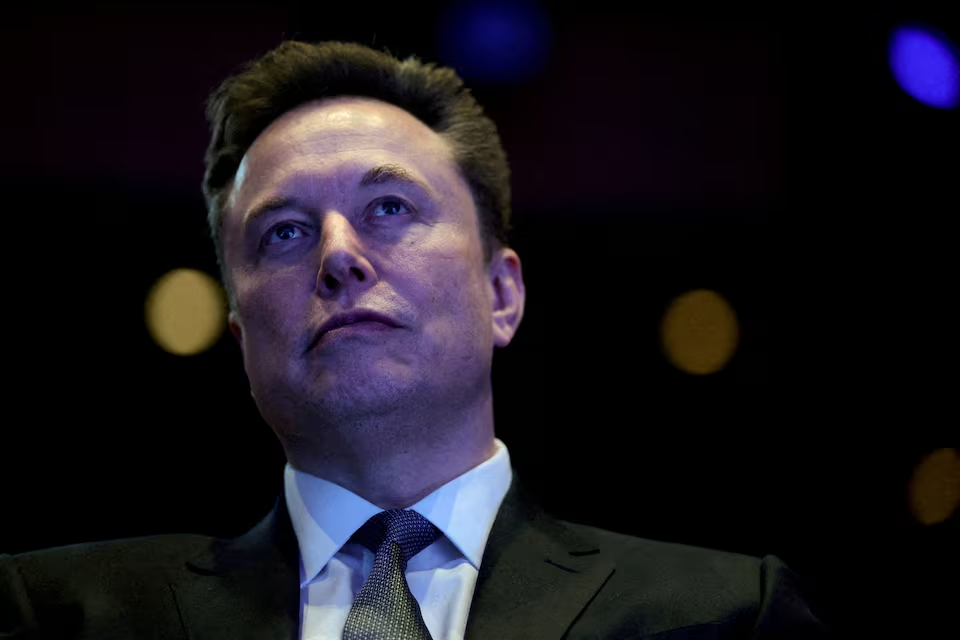
Elon Musk states that recent steps by SpaceX to halt Russia’s unauthorized use of the Starlink satellite internet system appear to have worked. The billionaire made the announcement on his social media platform, X, on Sunday. This follows Ukrainian reports that Russian forces were using Starlink terminals to guide long-range attack drones. Consequently, Kyiv’s military, which relies heavily on Starlink for its own communications, is now developing a system to authorize terminals on its territory. The situation highlights the complex dual-use nature of commercial technology in modern warfare.
Ukrainian Defence Minister Mykhailo Fedorov confirmed cooperation with SpaceX. He stated the initial collaborative steps delivered rapid results in countering Russian drones. Furthermore, Fedorov outlined the next phase: implementing a system allowing only authorized Starlink terminals to operate in Ukraine. This geofencing effort aims to definitively block Russian access. SpaceX has consistently stated it does not do business with the Russian government or military. However, the apparent leakage of terminals into Russian hands underscores the challenge of controlling technology on a contested battlefield.
The Discovery of Unauthorized Russian Use
Ukrainian officials revealed the issue earlier this week. They discovered Starlink terminals on Russian long-range drones used in attacks. This was a significant escalation, as Ukraine’s own war effort depends on tens of thousands of Starlink connections. The terminals are vital for battlefield communication, drone piloting, and coordinating artillery fire. The discovery suggested Russia had acquired terminals through third parties or captured them on the battlefield. It immediately created a urgent problem for both Kyiv and SpaceX.
SpaceX has no commercial sales or official presence in Russia. Its terminals are not shipped there directly. Therefore, the terminals likely entered Russian hands via intermediary nations or illicit arms networks. Alternatively, Russian forces may have captured Ukrainian units. Once in possession, the terminals could potentially connect to the satellite network if not properly geofenced or deactivated. This incident forced a rapid technological and diplomatic response from SpaceX and the Ukrainian government to close the security gap.
SpaceX’s Response and Technical Measures
Musk’s statement indicates SpaceX took swift, behind-the-scenes action. The exact technical measures are not public, but experts suggest several possibilities. The company could have deactivated specific terminal serial numbers identified by Ukraine. It might also have tightened geofencing around the front lines, making connections impossible outside Ukrainian-held territory. Another method involves analyzing usage patterns to identify and block terminals behaving like Russian military units. These steps require close coordination with Ukrainian intelligence.
The effectiveness of these measures is difficult to verify independently. Musk’s claim that they “seem to have worked” suggests a reduction in detected unauthorized activity. However, warfare is dynamic, and adversaries continuously adapt. Russia may seek new methods to acquire or spoof terminals. The cat-and-mouse game between SpaceX’s engineers and Russian electronic warfare units is now a critical, hidden front in the conflict. The company’s ability to maintain control over its network directly impacts battlefield outcomes.
Ukraine’s Plan for an Authorization System
Defence Minister Fedorov’s announcement reveals a more permanent solution is underway. The goal is a system that allows only pre-authorized Starlink terminals to connect within Ukraine. This would involve registering every legitimate Ukrainian military and civilian terminal with SpaceX. The network would then reject any connection attempt from an unregistered device. Implementing this at scale across a active war zone is a monumental technical and logistical challenge. It requires robust databases, secure communication channels, and real-time updating.
Such a system also risks unintended consequences. If a legitimate Ukrainian terminal is destroyed or captured, it must be immediately deactivated. Otherwise, Russia could use it. Conversely, if the authorization system malfunctions, it could block Ukrainian units at a critical moment. Reliability is paramount. The development of this system underscores Ukraine’s deep dependency on Starlink and the need to secure this dependency against enemy exploitation. Success would set a precedent for controlling commercial tech in conflict zones.
Strategic Implications for Commercial Tech in War
The Starlink incident illustrates a broader trend. Advanced commercial technology is increasingly decisive in warfare. From satellite internet to civilian drones and software, these tools are not designed for combat but are rapidly adapted. This creates a dilemma for companies like SpaceX. They must balance corporate policies, legal obligations, and moral considerations. Musk initially provided Starlink to Ukraine as a humanitarian gesture, but now must police its use against a sophisticated adversary.
For nations, reliance on a private, foreign-owned capability is a strategic vulnerability. Ukraine’s partnership with SpaceX is crucial but exposes it to the company’s internal decisions and technical capabilities. Other countries are watching closely. The event will likely accelerate military investments in sovereign, secure satellite communication networks. However, for now, Starlink remains a irreplaceable asset for Ukraine, making this collaboration both essential and fraught with complexity.
The Ongoing Challenge of Enforcement
Even with an authorization system, enforcement challenges will persist. The black market for dual-use technology is global and resilient. Russian intelligence will undoubtedly redouble efforts to acquire terminals and crack any security measures. Insider threats or corruption in supply chains present additional risks. SpaceX must maintain constant vigilance, requiring significant resources and attention. This distracts from its core commercial and exploration missions, highlighting the burdens a company can inherit by entering a warzone.
The diplomatic dimension also matters. SpaceX operates under US government regulations. Continued close cooperation with Ukraine likely has Washington’s full support. However, the company must navigate potential accusations of being a direct participant in the conflict. Its actions to block Russia, while praised by Kyiv, could provoke retaliation from Moscow against SpaceX’s global interests. Musk’s statement is therefore a public reassurance to allies and a warning to adversaries that the loophole is being closed.
Looking Ahead: A New Phase of Digital Warfare
The confrontation over Starlink marks a new phase in the digital aspect of the Ukraine war. It moves beyond hacking and cyberattacks into the physical control of communication infrastructure. The ability to grant or deny connectivity in a specific region is a powerful form of control. As low-Earth orbit satellite constellations proliferate, similar issues will arise in future conflicts. Governments and companies must establish clearer protocols for these scenarios before they occur.
For Ukraine, the immediate priority is solidifying the Starlink advantage while developing alternatives. For SpaceX, the priority is securing its network without disrupting its legitimate users. The partnership, though born of necessity, has proven adaptable. Musk’s brief update suggests confidence, but the true test will be on the battlefield in the coming weeks. If Russian drone guidance is indeed degraded, it will demonstrate the tangible impact of corporate action in modern warfare.