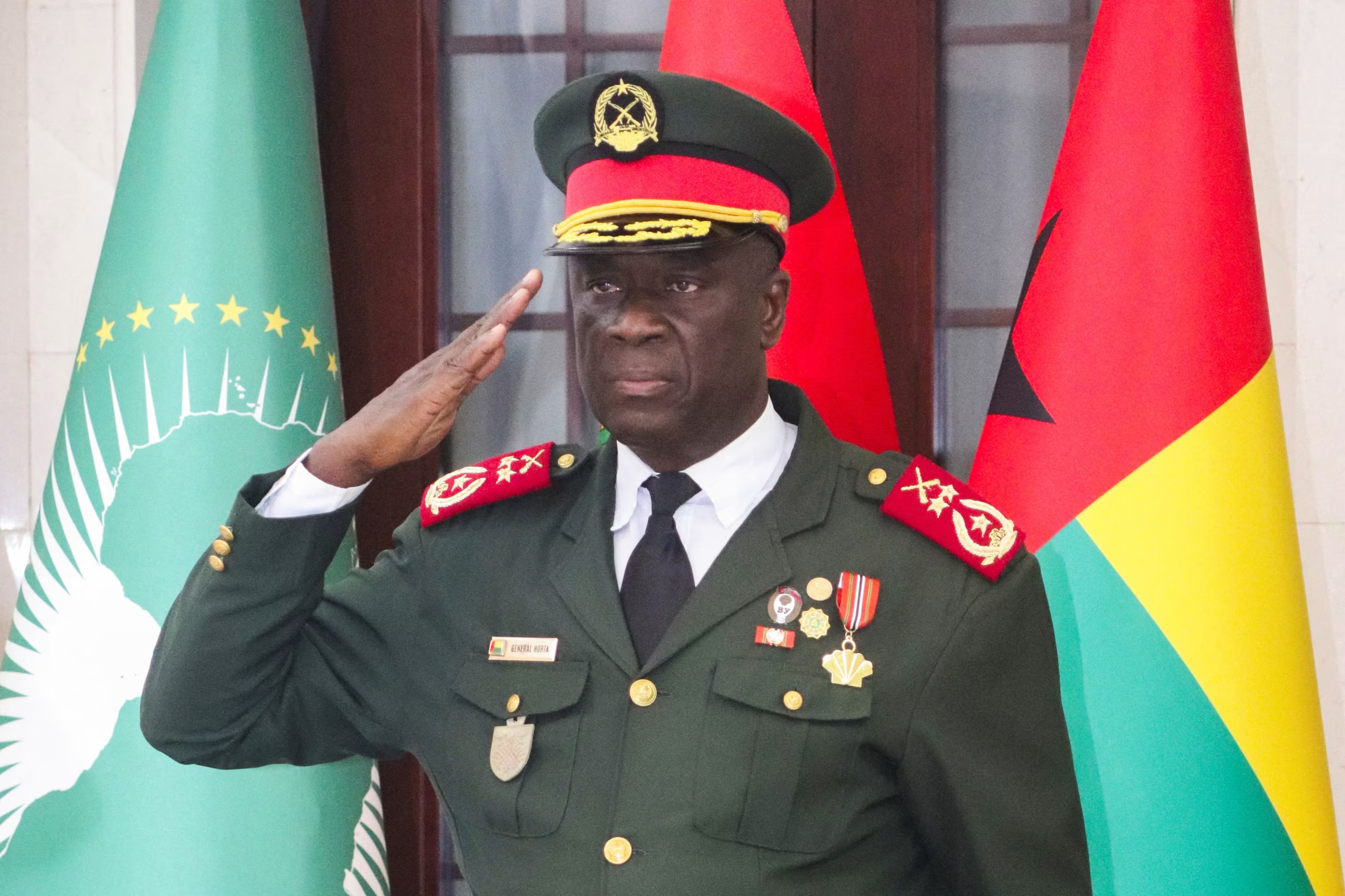
Political tension in Guinea-Bissau has intensified as several West African political leaders and analysts dismiss the recent alleged coup attempt as a staged or manipulated event orchestrated for political gain. The small coastal nation, long plagued by instability, is once again under the spotlight as critics argue that the government’s narrative surrounding the so-called coup does not align with eyewitness accounts or regional intelligence assessments.
According to senior political figures in ECOWAS member states, the dramatic events described by Guinea-Bissau officials do not meet the hallmarks of a genuine attempted overthrow. Instead, they believe the incident may have been strategically exaggerated or mischaracterized to consolidate power, silence dissent, or justify upcoming political moves.
Conflicting Narratives Raise Questions
The government of Guinea-Bissau reported that armed factions within the national guard attempted to destabilize the state, prompting a swift response from loyalist forces. However, diplomats and political observers in the region say the timeline and details remain inconsistent. Some claim that movement of troops appeared coordinated rather than chaotic, contradicting the government’s portrayal of a surprise attack.
Regional intelligence sources have also indicated that they found no significant signs of widespread military mobilization typically associated with coup attempts in West Africa. Instead, they observed limited, localized confrontations that may have stemmed from internal disputes rather than a major organized uprising.
Opposition Leaders Reject Government Claims
Opposition parties in Guinea-Bissau were quick to denounce the official version of events. Several opposition figures argued that the alleged coup was used as a political tactic to discredit rival factions within the security forces and justify emergency measures.
They accuse the government of using the narrative to gain sympathy from international partners while tightening control over state institutions. Some leaders expressed concern that the “sham coup” could be a precursor to broader crackdowns on political opponents, journalists, and civil society groups who have been increasingly vocal about corruption and governance failures.
ECOWAS Voices Skepticism
Within the Economic Community of West African States (ECOWAS), senior officials—speaking off the record—voiced doubts about the legitimacy of the incident. They noted that Guinea-Bissau has experienced multiple coups, mutinies, and political crises since gaining independence, but the latest event lacked the scale and complexity normally seen in genuine power struggles.
Some ECOWAS figures privately suggested that the incident may have been engineered to justify increased security spending or to frame certain military figures as threats, thereby reshaping the internal balance of power. While ECOWAS has publicly called for calm and stability, behind-the-scenes discussions indicate growing frustration with political theatrics that undermine regional confidence.
A Pattern of Political Maneuvering
Guinea-Bissau has a long history of political volatility, with leaders frequently leveraging security incidents to strengthen their positions. Analysts argue that the latest episode appears to follow a similar pattern, where government officials present exaggerated threats to justify executive actions.
In recent years, tensions between the president, parliament, and security institutions have created a fragile political environment. Power struggles among military commanders, allegations of drug trafficking influence, and disputes over constitutional reforms have added to the volatility, making narratives of coups or countercoups politically advantageous tools for various actors.
Public Concern Over Future Stability
Citizens in the capital, Bissau, expressed mixed reactions. While some believe the government’s story, others view the situation as yet another example of political manipulation that offers little benefit to ordinary people. Many residents worry that the controversy will fuel further uncertainty, impacting economic activity, public services, and international aid.
Civil society organizations have called for transparent investigations and independent monitoring to determine what truly happened. They warn that without accountability, Guinea-Bissau will remain vulnerable to recurring crises that erode public trust and encourage opportunistic political behavior.
International Community Urges Calm
Foreign partners, including the African Union and the United Nations, have advised restraint and encouraged dialogue. They emphasize the need for credible information and stress that stability is crucial for protecting democratic institutions in a country already struggling with economic challenges.
For now, the controversy surrounding the alleged coup continues to dominate political discourse, with many observers expecting further revelations in the coming weeks. Whether the incident was a genuine threat or a carefully constructed political maneuver, it has once again exposed the deep fractures within Guinea-Bissau’s political and security landscape.