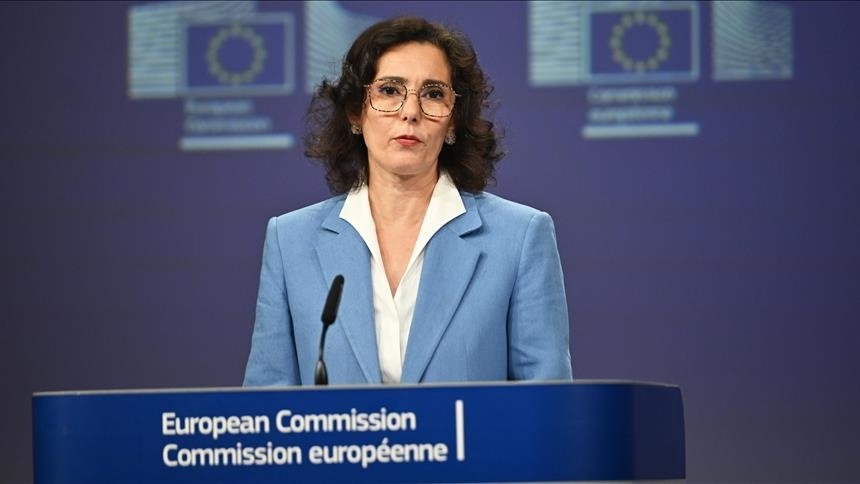
A diplomatic dispute has emerged after an EU commissioner blocked from entering Gaza said Israel refused to grant her permission to cross into the enclave through the Rafah crossing. Hadja Lahbib, the EU Commissioner for Equality and Acting Commissioner for Crisis Management, revealed during her visit to Egypt that she had hoped to assess the humanitarian situation in Gaza firsthand.
Lahbib expressed deep concern over the ongoing suffering in the territory, noting that Palestinians continue to be killed daily despite the recent ceasefire. Since the pause began, she said 347 Palestinians — including 67 children — have lost their lives.
She described Gaza as a graveyard for thousands of civilians and humanitarian workers, pointing out that nearly 600 aid workers have been killed while carrying out life-saving duties in what she called “the most dangerous place in the world.”
With winter approaching, Lahbib warned that conditions for displaced Palestinians will worsen. Families have nowhere to seek shelter and no means to stay warm, and experts predict the coming months will be “disastrous.”
Calls for Compliance and Continued Ceasefire
Lahbib reiterated the need for the ceasefire to hold, stressing that only full compliance with international law can protect civilians. She said it is essential to move from the first phase of the ceasefire to the second, which includes the disarmament of Hamas and the return of all remaining hostages.
Aid is beginning to reach the population, she noted, but the amount delivered is still far below what is required. She urged Israel to allow NGOs to operate freely and speed up procedures for humanitarian access, calling the classification of tents and sleeping bags as “dual-use” — items with possible military applications — unacceptable.
Accountability and Reconstruction
Lahbib emphasized that the EU must ensure that aid funded by European taxpayers reaches those who urgently need it. She also urged efforts to help Gaza transition from “survival mode” toward eventual rebuilding, saying the region must one day “turn this sea of rubble back into homes and schools.”
During her visit to Egypt, Lahbib toured the city of El Arish, inspected a warehouse filled with aid destined for Gaza and visited a hospital treating evacuated patients.