A Major Trade Tension Between the U.S. and Europe
In a surprising move, the European Union (EU) has suspended the approval of a key trade deal with the United States, following President Donald Trump’s renewed threats regarding Greenland. The suspension was announced on January 21, 2026, in Strasbourg, France, during a session of the European Parliament. The move comes after escalating tensions between the U.S. and Europe, triggered by Trump’s controversial bid to acquire Greenland, a territory of Denmark. The suspension of the trade agreement, which was originally negotiated in July 2025, has added another layer of complexity to the already fraught transatlantic relations.
The trade deal, which aimed to reduce tariffs and boost economic cooperation between the U.S. and the EU, had been hailed as a breakthrough in the wake of previous trade disputes. However, the renewed conflict over Greenland, combined with Trump’s threat to impose tariffs on European countries that oppose his bid to control the island, has now put the agreement in jeopardy. This article explores the origins of the trade dispute, the European Union’s response, and the broader implications for U.S.-EU relations and global trade.
Background: The Greenland Dispute and Trump’s Territorial Ambitions
The Greenland dispute has been at the center of a tense diplomatic standoff between the U.S. and Denmark. President Trump has long expressed interest in acquiring Greenland, citing its strategic location in the Arctic and its vast untapped natural resources. Greenland’s importance in global geopolitics has grown in recent years due to melting ice and new shipping routes, making the Arctic a focal point of competition between major powers, including the U.S., Russia, and China.
In 2019, Trump famously proposed purchasing Greenland from Denmark, an offer that was swiftly rejected. However, in 2024, Trump reignited the issue, threatening to impose tariffs on Denmark and other European countries unless they agreed to a deal that would allow the U.S. to acquire Greenland. Denmark, along with many European leaders, rejected the idea, reiterating that Greenland was not for sale and that any attempt to seize it by force would damage NATO’s unity.
Despite this, Trump continued to pressure European countries, and in 2025, he proposed a series of tariffs on European goods in a bid to leverage the Greenland issue. This aggressive stance raised concerns about a trade war and threatened to unravel the fragile trade relations between the U.S. and Europe.
The Trade Deal: A Glimmer of Hope for U.S.-EU Relations
In July 2025, following months of trade tensions, the U.S. and the EU reached a tentative trade agreement at Trump’s Turnberry golf resort in Scotland. The deal, which aimed to reduce tariffs on European goods and foster economic cooperation, was seen as a positive step toward resolving the ongoing trade disputes. Under the agreement, U.S. tariffs on European goods were to be reduced from 30% to 15%, and Europe pledged to invest in the U.S. economy and make changes to policies that would boost U.S. exports.
However, the agreement was contingent on approval from the European Parliament, which would formalize the deal. The trade agreement was expected to bring much-needed relief to both economies, which had been suffering from the uncertainty caused by Trump’s earlier tariff threats. But just as the deal appeared to be on the verge of completion, the Greenland issue resurfaced, plunging U.S.-EU relations back into turmoil.
EU’s Response: Suspension of the Trade Deal
In response to Trump’s renewed threats over Greenland, Bernd Lange, the chair of the European Parliament’s International Trade Committee, announced that the EU had no choice but to suspend work on the approval of the U.S. trade deal. Lange stated that the EU could not move forward with the deal until the U.S. “re-engaged on a path of cooperation rather than confrontation.” He made it clear that Europe would not tolerate the use of coercive tactics in negotiations, particularly regarding Greenland.
The suspension of the trade deal has significant implications for both the U.S. and Europe. The agreement was expected to reduce tariffs on goods worth billions of dollars, providing a boost to trade between the two regions. With the deal now in limbo, the possibility of retaliatory tariffs on U.S. goods looms large. The EU had already announced plans to impose tariffs on American goods worth approximately €93 billion ($109 billion), but those plans were put on hold while the trade deal was being finalized. Now, those tariffs could come into effect as soon as February 7, 2026, unless the EU decides to extend the pause or approve the deal.
The Potential for a Trade War: Retaliation on the Horizon?
With the EU suspending the trade deal, the threat of a full-blown trade war between the U.S. and Europe is back on the table. The EU has the option to implement retaliatory tariffs on a wide range of U.S. goods, targeting sectors such as agriculture, technology, and automobiles. The potential for these tariffs to negatively impact U.S. businesses and consumers has already raised concerns within the U.S. government.
Lange raised the possibility of using the EU’s “anti-coercion instrument”—a retaliatory measure that could impose tariffs on U.S. goods in response to Trump’s tactics. This measure, which has been dubbed the “trade bazooka,” is designed to counter aggressive or coercive trade practices and would allow the EU to take swift action against U.S. tariffs and threats. European leaders, including French President Emmanuel Macron, have voiced strong support for this approach, emphasizing that Europe cannot be “blackmailed” into accepting unfair trade terms.
In an interview with the BBC, Lange declined to say whether the U.S. could salvage the trade deal, noting that it would take time to assess the implications of Trump’s shift in approach. While some European officials believe Trump’s change of heart was inevitable, the situation remains fluid, and the future of the U.S.-EU trade relationship is uncertain.
Trump’s Reversal: A Strategic Climbdown
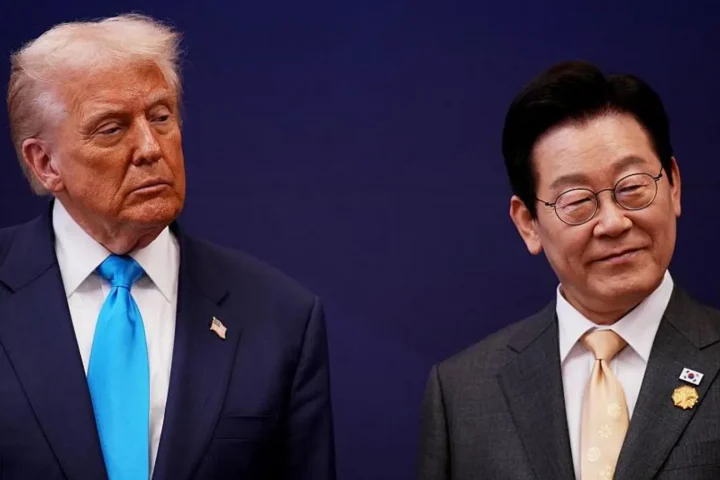
Just hours after the EU’s announcement, Trump took to social media to announce that he would no longer impose the threatened tariffs and had reached a “framework” deal on Greenland. Trump’s comments were seen as a reversal of his previous stance, which had included threats of economic retaliation against European countries that opposed his plans to acquire Greenland. In his post, Trump expressed optimism that the framework would be beneficial for the U.S. and NATO nations, with a focus on Arctic security and economic cooperation.
The framework, however, remains vague, with little concrete information provided about its details. Trump’s comments in Davos indicated that the deal would focus on the security of Greenland and the Arctic region, addressing concerns about Russian and Chinese influence in the area. Despite Trump’s assurances that he would not take forceful action to acquire Greenland, the lack of clarity on the specifics of the framework has left many European leaders skeptical.
The Future of U.S.-EU Relations: Will a Deal Be Reached?
The suspension of the trade deal and the renewed tension over Greenland underscore the fragility of U.S.-EU relations under President Trump’s leadership. While the recent diplomatic shift offers hope for de-escalation, the broader issue of Greenland’s future and the security of the Arctic region remain unresolved. The EU’s suspension of the trade deal serves as a reminder that Europe will not tolerate aggressive tactics or coercion in negotiations.
As the U.S. and Europe continue to navigate these challenges, it is clear that the outcome will depend on the ability of both sides to find common ground. The U.S. will need to reassure Europe that its approach to Greenland and Arctic security is based on mutual cooperation rather than unilateral actions. In turn, Europe must remain steadfast in its commitment to territorial integrity and the protection of international norms.
A Pause in Tensions, But Uncertainty Remains
President Trump’s decision to back down from his tariff threats marks a temporary de-escalation in the Greenland dispute, but the future of the U.S.-EU trade deal and the broader relationship remains uncertain. The EU’s suspension of the trade deal highlights the ongoing challenges in transatlantic relations, with Greenland at the center of a complex geopolitical issue. As the two sides move forward with negotiations, the ability to reach a mutually beneficial agreement on Greenland and Arctic security will shape the future of U.S.-EU relations.