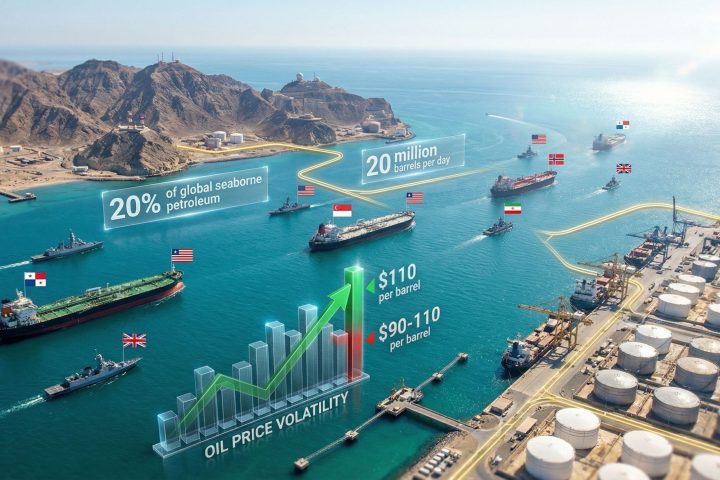
Europe inflation risk is increasing as economists examine how the Iran war could push energy costs higher across the eurozone. Rising oil and gas prices remain the main concern for policymakers and investors.
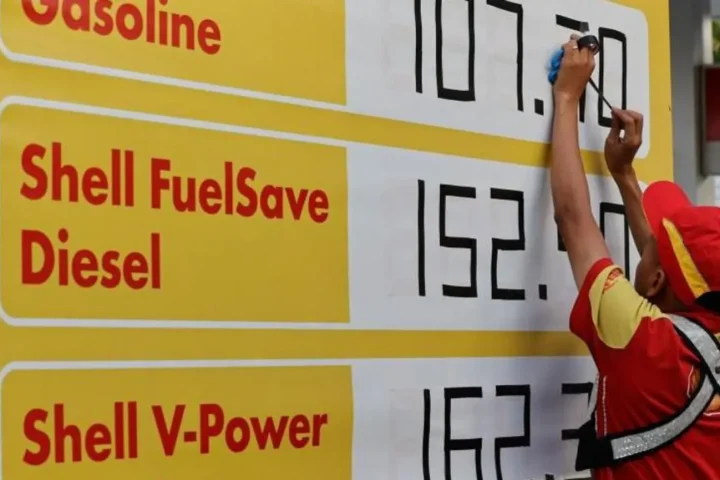
Although crude prices dropped sharply after signs the conflict might ease, fuel prices in Europe remain high. Retail prices often respond slowly to changes in oil markets. As a result, households and businesses continue to feel the pressure from earlier price spikes.
Europe depends heavily on imported energy. Therefore, even a short disruption in global supply can affect inflation quickly. Analysts say the longer the conflict lasts, the greater the inflation risk for the region.
Europe inflation risk grows through energy prices
Europe inflation risk is closely linked to energy markets. Most eurozone countries import large amounts of oil and gas. When global prices rise, those costs move quickly into the wider economy.
Economists say a 10% rise in oil prices can increase eurozone inflation by roughly 0.3 percentage points. This estimate comes from research by Goldman Sachs economists.
The effect can grow stronger if natural gas prices also increase. Gas markets follow different dynamics, but both fuels influence electricity, transport, and industrial production.
Higher energy costs also affect supply chains. Companies must pay more for shipping, manufacturing, and heating. Many businesses eventually pass those costs on to consumers.
Three scenarios for eurozone inflation
Economists have outlined several possible inflation paths depending on energy prices. The first scenario assumes oil stabilizes near $80 per barrel while gas trades around €50 per megawatt hour.
Under that outcome, eurozone inflation could briefly reach about 2.5% during the spring. Prices would likely return below 2% later in the summer as energy costs stabilize.
A second scenario assumes a stronger energy shock. Oil could rise to around $100 per barrel and gas to €60 per megawatt hour. Inflation could then average about 2.4% across 2026.
In that case, inflation might climb above 3% during the second quarter. Economic growth would also slow slightly as energy costs weigh on businesses and consumers.
The third scenario considers a longer disruption. Even if oil stays near $80, a four-month shock could keep inflation near 2.2% for the year. Growth across the eurozone would also weaken.
ECB rate outlook shifts with Europe inflation risk
Europe inflation risk is already changing expectations for the European Central Bank. Before the conflict, investors expected central banks to cut interest rates across developed economies.
Now markets are reconsidering that outlook. Rising energy costs increase the chance that inflation will remain above the ECB’s target.
Economists say central banks can no longer ignore energy shocks as temporary. Repeated price spikes may influence consumer expectations and wage negotiations.
Oxford Economics estimates current energy assumptions could push eurozone inflation about 0.5 to 0.6 percentage points higher by late 2026. This increase is larger than in many other major economies.
Because of this risk, the ECB may need to tighten policy again if energy prices remain high.
Fuel costs keep pressure on households and firms
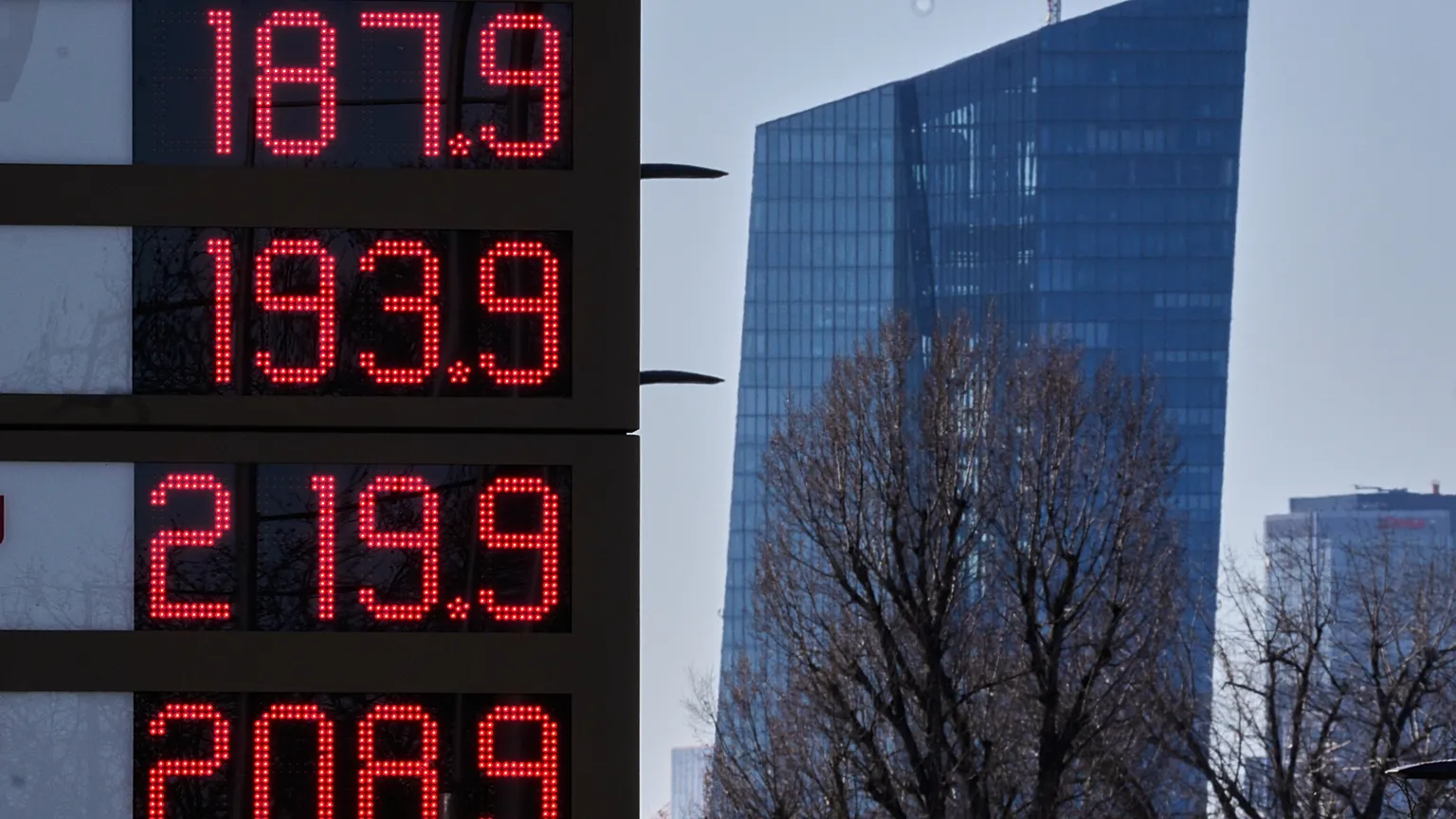
Europe inflation risk is visible in fuel prices across major cities. Petrol and diesel still cost close to or above €2 per litre in several parts of the region.
High transport costs affect both consumers and companies. Businesses face rising costs for logistics, production, and electricity.
These pressures often spread through the economy. Food, goods, and services can become more expensive when energy prices stay elevated.
Economists say the key factor now is how long the conflict continues. If supply routes stabilize soon, inflation could ease later in the year.
However, if energy disruptions persist, the eurozone could face higher inflation and slower growth at the same time.