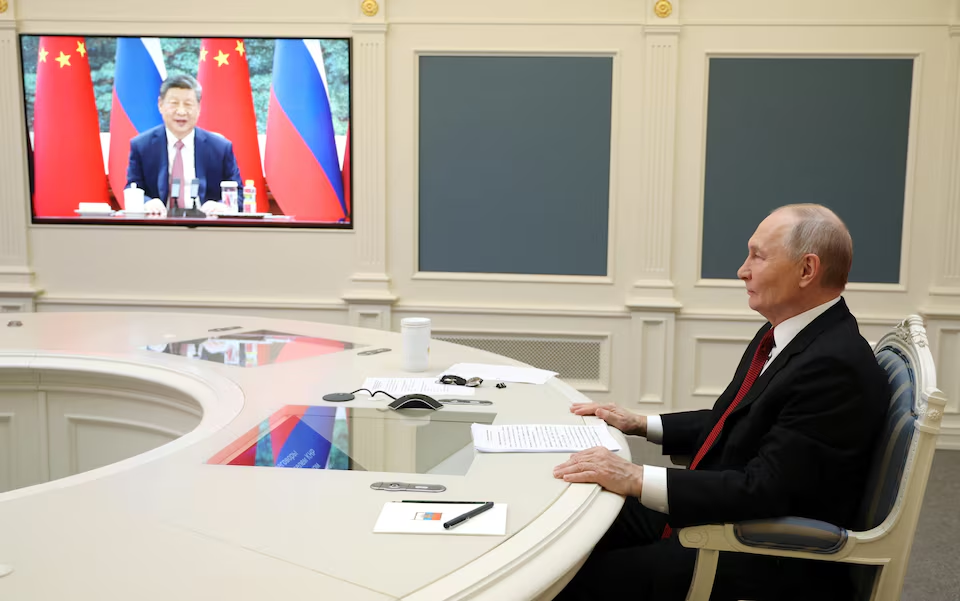
Chinese President Xi Jinping and Russian President Vladimir Putin held a significant video call on February 4, 2026, marking an important moment in the evolving relationship between the two countries. As the war in Ukraine approaches its fourth anniversary, the two leaders emphasized the growing cooperation between China and Russia, particularly in energy, trade, and strategic alignment. Their conversation comes at a time when global tensions are high, and both countries are facing pressure from Western powers.
Strengthening the Moscow-Beijing Partnership
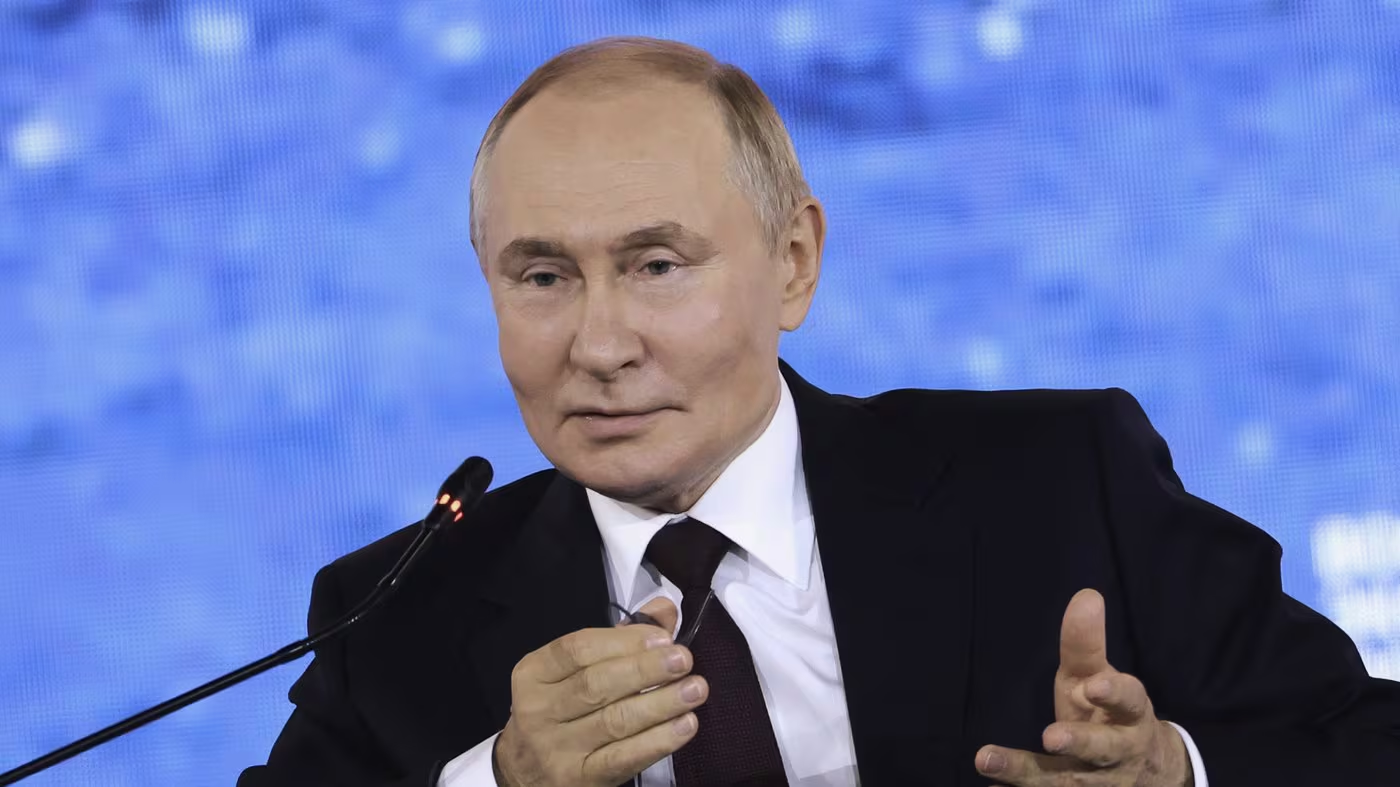
In the televised broadcast of their talks, President Putin stressed the importance of Russia-China relations, describing them as a stabilizing factor in the face of increasing global instability. He specifically praised the countries’ energy partnership, calling it both strategically crucial and mutually beneficial. Russia, with its vast energy resources, has become a key supplier of energy to China, and this cooperation has deepened as both nations face mounting challenges from Western sanctions.
Xi Jinping, speaking through an interpreter, called for a “grand plan” to advance bilateral relations between the two nations. He emphasized that the countries were moving in the right direction and needed to seize the historic opportunity to deepen their ties. Xi suggested that both China and Russia should maintain close high-level exchanges and further strengthen their cooperation in various sectors, including trade, military, and technology.
A “No-Limits” Partnership
The partnership between China and Russia has evolved rapidly since the early days of the war in Ukraine. Just days before Russia launched its invasion of Ukraine in February 2022, both countries declared a “no-limits” strategic partnership, pledging to support each other on international matters. This statement marked a significant moment in their relationship, signaling a deepening of ties in the face of increasing pressure from Western powers.
In the years that followed, China emerged as a critical economic lifeline for Russia, especially as the West imposed a series of sanctions on Moscow. China increased its trade with Russia, buying oil, gas, and other resources, while also providing diplomatic support on the international stage. This economic collaboration has been vital for Russia, as it seeks to mitigate the impact of sanctions and continue its war effort in Ukraine.
Putin’s Upcoming Visit to China
Kremlin aide Yuri Ushakov confirmed that the two leaders spoke for a lengthy 1 hour and 25 minutes during the video call. One of the key outcomes of the conversation was Putin’s acceptance of an invitation from Xi to visit China in the first half of 2026. This visit will further solidify the already strong ties between the two nations and is expected to involve discussions on energy, trade, and other key areas of cooperation.
In the past, the two leaders have met in person on several occasions, most notably in September 2025 when Xi visited Beijing for a grand military parade. North Korean leader Kim Jong Un also attended this event, signaling a broader alignment of interests between Russia, China, and North Korea. During that meeting, Xi Jinping reaffirmed China’s commitment to supporting Russia in its foreign policy objectives, emphasizing that China and Russia had weathered significant international turbulence together.
Shared Views on Global Issues
During the video call, Putin and Xi also discussed various global issues, agreeing on many positions regarding international matters. One of the key areas of agreement was their stance on arms control, particularly in relation to nuclear weapons. With the nuclear arms reduction treaty between Russia and the United States set to expire this week, both leaders expressed the need for continued dialogue and coordination on multilateral arms control.
Xi and Putin’s alignment on global issues is becoming increasingly apparent. Both leaders have criticized Western interference in their respective spheres of influence and have sought to present an alternative to the Western-dominated global order. In particular, Russia has relied on China for support in its confrontation with the West over the war in Ukraine, while China has leaned on Russia as a counterbalance to U.S. influence in global politics.
Tensions Over Military Aid and Taiwan
Despite their close diplomatic and economic cooperation, the relationship between China and Russia is not without its complexities. One area of tension remains accusations from the West that China is providing direct military aid to Russia’s war effort in Ukraine. While Beijing has repeatedly denied these allegations, claiming it is not directly involved in the conflict, the situation continues to draw scrutiny from international observers. Both Xi and Putin have stated that their nations are committed to non-interference in each other’s domestic affairs, but the war in Ukraine has undeniably become a point of contention in their bilateral relations.
In addition to their discussions on Ukraine, the issue of Taiwan continues to be a major focal point in Sino-Russian relations. Russia has consistently expressed its support for China’s position on Taiwan, a democratically governed island that China claims as its own territory. During the call, Russian Security Council Secretary Sergei Shoigu reiterated Moscow’s support for Beijing over Taiwan, further solidifying the two countries’ alignment on this issue.
China, for its part, has pledged to deepen strategic coordination with Russia, particularly in areas such as military and economic cooperation. As tensions between China and the United States continue to escalate over issues like Taiwan and trade, Russia’s support provides a valuable ally for Beijing in its efforts to counterbalance U.S. influence in Asia and beyond.
Ongoing Diplomatic Engagement
The ongoing diplomatic engagement between China and Russia underscores the growing strength of their bilateral relationship. The two countries continue to coordinate closely on issues ranging from arms control to energy trade, and their alignment on international issues is expected to intensify in the coming years. Both Xi Jinping and Vladimir Putin have made it clear that their partnership is a strategic one, built on mutual interests and shared goals.
This video call marks yet another step in the strengthening of Sino-Russian ties, which are likely to continue evolving in the face of global challenges and geopolitical shifts. As the war in Ukraine persists, and as both nations face increasing pressure from Western powers, their alliance will continue to be a significant factor in the global geopolitical landscape.