A Call for Cohesion in a Fragmenting World
The geopolitical landscape is undergoing a seismic shift, one that promises to redefine alliances, power structures, and economic paradigms for decades to come. In this climate of profound uncertainty, Europe finds itself at a critical juncture, grappling with external pressures and internal divisions that threaten its global standing and strategic autonomy. The urgent need for a coherent, unified response has never been more apparent, as traditional alliances show strain and new forms of economic statecraft emerge. The continent’s future prosperity and security hinge on its ability to speak with one formidable voice.
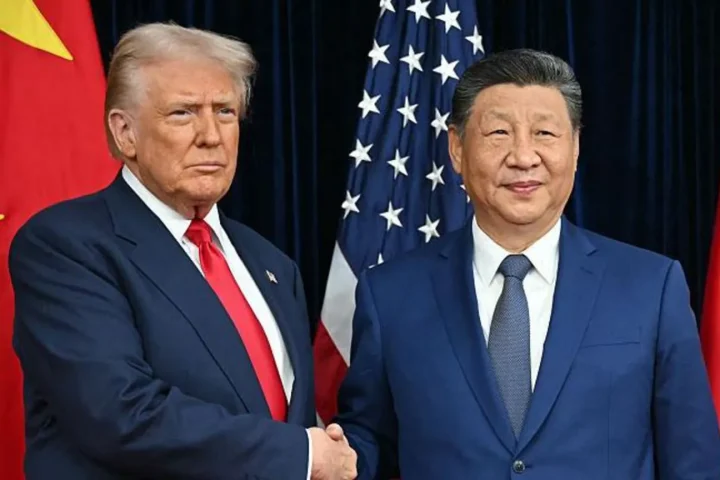
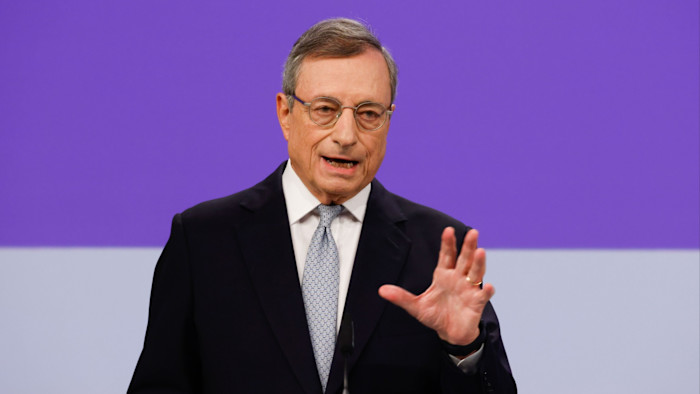
Echoing this dire assessment, former Italian Prime Minister and European Central Bank President Mario Draghi has issued a stark and compelling warning. In a recent address, Draghi declared the existing international economic order not merely weakened, but fundamentally “defunct” and “dead.” His analysis moves beyond simple diagnosis to outline a clear and present danger: the vacuum left by this collapse. The true threat, he contends, lies not in the disintegration itself, but in what may fill the void—a new reality shaped by the competing ambitions of the United States and China, where Europe risks irrelevance.
Draghi’s call for European unity is therefore a strategic imperative, not a political ideal. He argues that the European Union’s celebrated strengths in areas like trade and the single market are insufficient if they remain isolated from unified policy in defense and foreign affairs. A continent that is economically integrated but politically and militarily fragmented, he warns, presents a fatal weakness. External powers can, and will, exploit these divisions, leveraging commercial relationships against security dependencies. This moment demands a historic leap toward deeper integration to prevent Europe from becoming, in his words, “subordinated, divided, and deindustrialised at once.”
Dissecting the Dual Challenge from Washington and Beijing
Draghi’s framework identifies two distinct but interconnected challenges. From the United States, Europe faces an ally increasingly inclined to view transatlantic burdens through a transactional lens, one that “emphasises the costs it has borne while ignoring the benefits it has reaped.” This shift in American posture undermines decades of foundational trust and necessitates a Europe capable of assuming greater responsibility for its own security and economic resilience. Reliance on a unpredictable partner is a precarious strategy.
Simultaneously, the challenge from China is of a different nature but equal magnitude. It is an economic and systemic rivalry where Beijing “controls critical nodes in global supply chains and is willing to exploit that leverage.” This can manifest as market flooding, withholding critical inputs, or exporting economic imbalances. For a trade-dependent bloc like the EU, this represents a profound vulnerability. Without a coordinated, union-wide industrial and trade policy, individual member states are left exposed to coercive tactics, unable to muster the collective bargaining power needed to ensure fair competition and secure access to essential technologies and materials.
From Confederation to Federation: The Path Forward
The solution Draghi proposes is radical in its clarity: Europe must accelerate its journey “from confederation to federation.” History, he notes, provides the blueprint. Where Europe has successfully federated—on trade, competition, the single market, and monetary policy—it negotiates as a respected global power. Conversely, in domains like defense, industrial policy, and foreign affairs, where competence remains largely national, the EU is treated as “a loose assembly of middle-sized states to be divided and dealt with accordingly.” This disparity is the source of its current weakness.
The recent tensions over Greenland, cited by Draghi, exemplify this dynamic. The stark, unified European response to external territorial posturing “resonated with the public in ways that no summit communique could have achieved,” proving that citizens respond to decisive, collective action. It forced a clarity of purpose that abstract policy debates often lack. This episode underscores a central tenet: sovereignty in the 21st century is increasingly pooled, not diminished, through deeper union. A federated approach to critical common interests is the only way to preserve national autonomy in a world of superpowers.
Building a Europe That Protects and Projects
Implementing this vision requires actionable steps across multiple fronts. Firstly, a genuine European unity in defense spending and capability development is non-negotiable. This means moving beyond symbolic targets to shared procurement, interoperable forces, and strategic planning that complements NATO while reducing debilitating duplication. Secondly, a common industrial policy must safeguard critical supply chains, foster innovation in key sectors like clean tech and digital infrastructure, and provide a unified framework for screening foreign investments that threaten security or competitiveness.
Finally, a cohesive foreign policy stance is essential. Europe’s diplomatic and economic weight must be deployed strategically, with a single voice on issues from supporting Ukraine to managing relations in the Indo-Pacific. This requires reforming decision-making processes to enable quicker, more decisive action. The goal is not to build walls but to build capacity—ensuring that Europe can be a confident shaper of global rules, not a passive subject of them. The continent’s unparalleled network of trade agreements, regulatory influence, and commitment to a rules-based system remain immense assets, but only if backed by political will and strategic coordination.
Also read: Musk Claims Starlink Countermeasures Against Russia Are Working
The Stakes of Inaction in a New Era
The cost of hesitation is crystallizing by the day. A fragmented Europe invites external pressure, whether in the form of security guarantees offered with strings attached or economic dependencies used as political levers. Internal divisions only serve to amplify these vulnerabilities, creating openings for disinformation and influence campaigns designed to pit member states against one another. The alternative to greater European unity is not the preservation of national independence, but its gradual erosion in the face of forces no single European country can manage alone.
Also read: Draghi calls for pause to AI Act to gauge risks
Draghi’s message transcends typical federalist rhetoric; it is a cold-eyed assessment of power in a changing world. The post-war order that guaranteed European stability and prosperity has dissolved. In its place, a more contested, volatile system is emerging. Europe’s choice is not whether to engage with this new reality, but how. Will it remain a collection of voices, often dissonant, reacting to events shaped by others? Or will it forge a singular identity, combining its economic might with political and strategic coherence to defend its interests and values? The call for unity is no longer just about building a better union; it is about ensuring the continent’s secure and sovereign place in the century ahead.