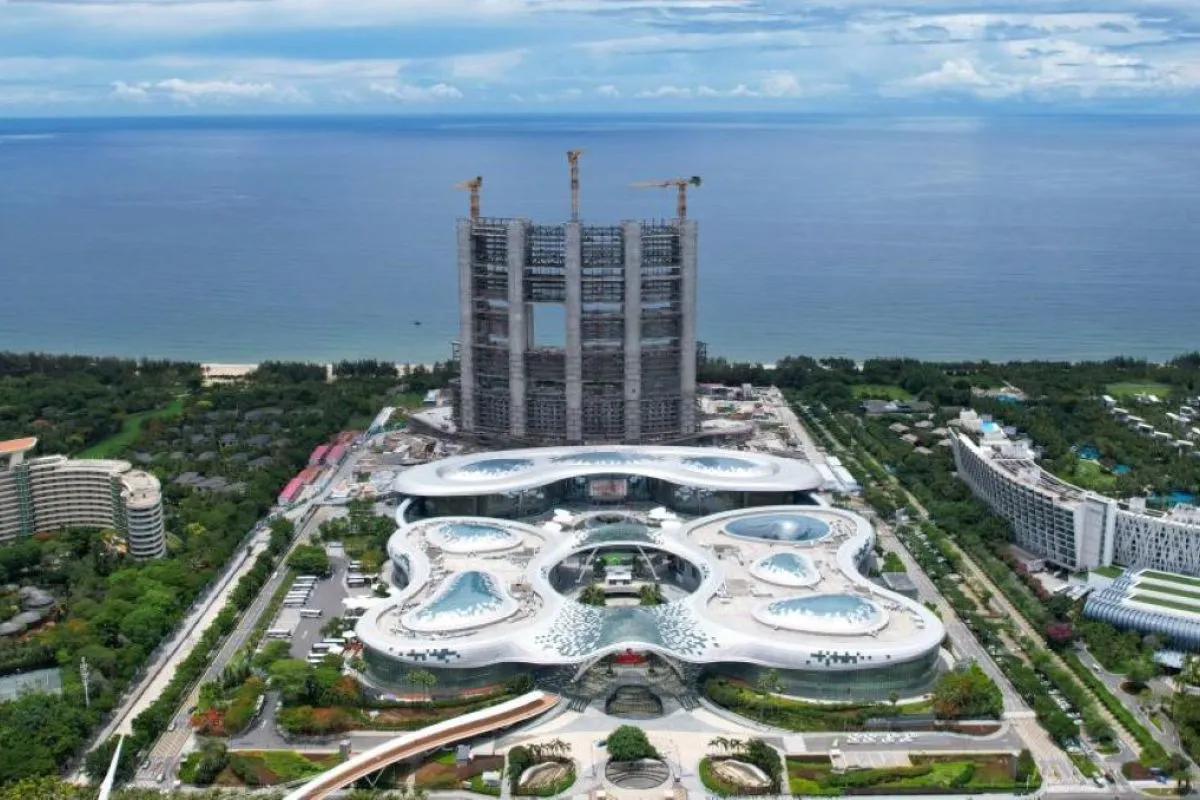
In a bold counter to global protectionism, China has officially launched the Hainan Free Trade Port. As of December 2025, the entire island province operates as a separate customs territory. This ambitious experiment aims to create the world’s largest free trade zone by area—bigger than Belgium—and reshape China’s role in global commerce. The move seeks to replicate the success of hubs like Singapore and Hong Kong on a massive scale.
The “Two-Line” System: Openness with Control
The port operates under a unique “first line open, second line controlled” customs system. The “first line” between Hainan and the world sees most trade barriers removed. A vast range of goods, from raw materials to consumer products, now enter with zero tariffs.
The “second line” between Hainan and mainland China maintains standard customs controls. This structure protects the domestic market. Crucially, it also incentivizes manufacturing within Hainan. Goods that gain at least 30% added value on the island can enter mainland China duty-free. This policy aims to transform Hainan from a transit hub into a value-added production base.
Unprecedented Business Incentives
The incentives are powerful. Hainan applies a flat corporate tax rate of 15%. This undercuts rates in Hong Kong (16.5%), Singapore (17%), and mainland China (25%). Furthermore, the province operates under distinct regulatory frameworks. For example, pharmaceuticals approved internationally can be used in Hainan even if banned elsewhere in China. Companies can also access a broader internet, bypassing the mainland’s “Great Firewall.”
A Strategic Gateway for Global Business
The scope of the plan extends far beyond tariffs. Hainan Free Trade Port offers foreign companies special bank accounts with relaxed capital controls. Foreign universities can establish independent campuses. Visa-free entry is now available for citizens from 86 countries, including the US, Germany, and Australia, for stays up to 30 days.
This comprehensive package positions Hainan as China’s strategic “pressure valve.” Amid global economic tensions, it offers a low-tax, high-access gateway to Asia-Pacific markets. The Chinese Communist Party projects Hainan will reach “institutional maturity” by 2035 and achieve “strong global influence” by mid-century.
Context and Ambition
This move continues China’s tradition of using Special Economic Zones (SEZs) to pilot capitalist mechanisms within a state-controlled system. However, Hainan’s scale is unprecedented. It represents a direct attempt to attract foreign investment and talent by offering a uniquely liberalized environment inside China.
In conclusion, the launch of the Hainan Free Trade Port is a landmark strategic gambit. By creating a province-sized zone of exceptional openness, China aims to redirect global trade and investment flows. Its success or failure will test whether a state-led economy can out-compete global rivals by offering unparalleled regulatory freedom in one carefully bounded location.