A Global Automotive Powerhouse in the Heart of Europe
Slovakia, a small landlocked country with a population of just 5.4 million people, has managed to position itself as one of the world’s leading car manufacturers, producing nearly a million cars annually. This achievement is all the more impressive considering Slovakia’s size and its relatively recent emergence as a key player in the global automotive industry. The country has become home to major production plants for international carmakers like Kia, Volkswagen, and Stellantis, all of which have invested heavily in Slovakia’s auto sector. What started as a modest industry has now turned Slovakia into a formidable force in car production, and its automotive sector plays a crucial role in the country’s economy.
In this article, we’ll explore how Slovakia transformed from a communist-era nation with a struggling car industry to a car-making powerhouse, the factors that led to this success, and how the country’s automotive sector continues to thrive in a competitive global market.
Slovakia’s Automotive Legacy: From Communist Struggles to Global Players
Before the Velvet Revolution of 1989, Slovakia’s automotive industry was part of the larger Czechoslovak Socialist Republic, and it struggled to meet Western standards. Cars made in Slovakia during this era were known for being noisy, inefficient, and technologically outdated. However, the end of communist rule and the dissolution of Czechoslovakia in 1993 set the stage for a complete transformation in the country’s car industry.
In the 1990s, following the split of Czechoslovakia into two independent nations, Slovakia began to attract significant foreign investment in the automotive sector. Volkswagen was one of the first companies to recognize the potential in the region, investing in the Czech automaker Skoda and eventually taking full control of the company by 2000. The country’s automotive industry quickly began to modernize, and in the years that followed, more international carmakers followed suit, lured by Slovakia’s low labor costs, strategic location, and growing manufacturing capabilities.
Slovakia’s cost-effective labor force, combined with its proximity to Western European markets, made it an attractive destination for major car manufacturers looking to establish manufacturing bases in Eastern Europe. This shift in the automotive landscape laid the foundation for Slovakia’s rise as a global automotive hub.
The Key Players: Kia, Volkswagen, Stellantis, and More
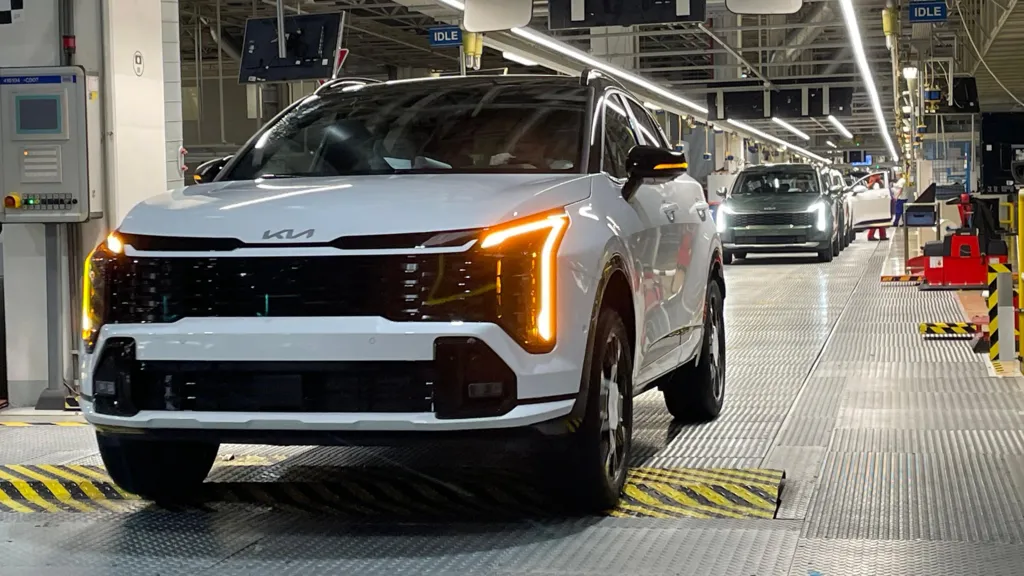
Today, Slovakia is home to some of the biggest names in the global automotive industry, with multiple production plants operating within the country. Kia’s plant in Zilina, Slovakia’s automotive heartland, is one of the most significant in Europe. With an investment of €2.5 billion ($2.9 billion), this massive facility produces 350,000 cars annually, including models like the Kia Sportage and Ceed. Kia’s Zilina plant is a testament to the country’s growing importance in the European automotive sector, and it plays a crucial role in the company’s overall production strategy.
In addition to Kia, Slovakia is also home to production facilities for major carmakers like Volkswagen, Stellantis (the parent company of brands such as Peugeot, Citroën, and Fiat), and Jaguar Land Rover. Volkswagen’s plant in Bratislava, Slovakia’s capital, manufactures popular models like the VW Touareg and the Audi Q7, while Stellantis operates its own plants in the country, producing cars under brands like Fiat and Chrysler.
Slovakia’s automotive industry is also poised to expand further with the announcement of a new electric vehicle factory by Volvo, which is scheduled to open in 2027. This move underscores the country’s growing importance in the emerging electric vehicle market, as car manufacturers look to tap into Europe’s increasing demand for low-emission vehicles.
Why Slovakia? The Perfect Formula for Automotive Success
Several factors have contributed to Slovakia’s success as a car-making heavyweight, chief among them being its strategic location in Central Europe. The country’s central position provides manufacturers with easy access to the major European markets, including Germany, France, and the UK. Slovakia’s excellent transport infrastructure, which includes well-connected highways and railways, makes it an ideal hub for car production and distribution across the continent.
In addition to its location, Slovakia’s highly educated and skilled workforce has played a key role in attracting foreign investment. The country boasts a tradition of industrial work, with a well-established base of skilled labor in manufacturing and engineering. Car manufacturers in Slovakia benefit from a stable, highly productive workforce at a lower cost compared to Western European countries. Slovakia’s average wage is significantly lower than in other European nations, making it an attractive destination for companies looking to reduce production costs while maintaining high productivity.
The Slovak government has also played a critical role in fostering the growth of the automotive sector. Through various incentives, including tax breaks and subsidies for foreign investors, the government has made it easier for companies to set up operations in the country. In exchange, Slovakia has benefited from the creation of thousands of high-paying jobs in the automotive industry, leading to a dramatic reduction in unemployment and a boost to the country’s economy.
Slovakia’s Leading Role in Electric Vehicle Production
The shift toward electric vehicles (EVs) is transforming the automotive industry, and Slovakia is positioning itself as a key player in this transition. The country has already attracted significant investments in the EV sector, with companies like Kia and Volkswagen preparing to produce electric vehicles in their Slovak plants. In 2027, Volvo will open an electric vehicle factory in Slovakia, marking a significant step in the country’s efforts to become a leader in the electric car market.
Slovakia’s high rate of low-carbon energy production—primarily from hydroelectric and nuclear power—makes it an ideal location for EV manufacturing. The country’s growing use of renewable energy sources further enhances its attractiveness to companies producing electric cars, as it allows them to offer environmentally friendly vehicles with a smaller carbon footprint.
The European Union’s push for stricter emissions standards and incentives for low-emission vehicles has also played a role in Slovakia’s automotive growth. With governments across Europe offering subsidies and grants to support the transition to cleaner vehicles, Slovakia stands to benefit from its early investment in electric car production.
The Economic Impact: A Thriving Industry with Global Reach
Slovakia’s automotive industry is not only crucial to the country’s economic growth but also plays a significant role in the broader European automotive market. With nearly one million cars produced annually, Slovakia leads the world in car production per capita, a remarkable achievement for a nation of its size. The automotive sector contributes significantly to Slovakia’s GDP, and the country has become one of the most important car-making nations in Europe.
The impact of this industry extends beyond the major car manufacturers, as Slovakia is home to a dense network of suppliers and subcontractors. Around 360 companies are involved in Slovakia’s automotive supply chain, providing everything from parts and components to assembly line equipment. This extensive supplier base is a key factor in the country’s competitiveness, as it allows for fast, cost-effective production and minimal disruptions to the manufacturing process.
The Future: Slovakia’s Continued Automotive Growth
Slovakia’s automotive sector shows no signs of slowing down. As car manufacturers continue to invest in the country, Slovakia’s role as a major player in the global car industry is only set to grow. The country is well-positioned to capitalize on the shift to electric vehicles, and its strategic location, skilled workforce, and favorable business environment make it an attractive destination for both established carmakers and new entrants to the market.
Looking ahead, Slovakia will continue to benefit from the growth of the automotive sector, which will help maintain its competitive edge in the European and global car markets. As the country adapts to the demands of the future, its automotive industry will remain a cornerstone of its economy and a symbol of its remarkable transformation from a communist-era nation to a global car-making powerhouse.